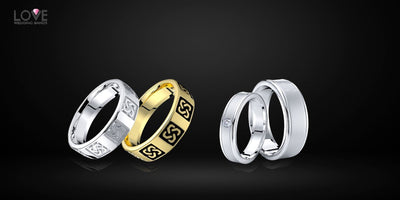
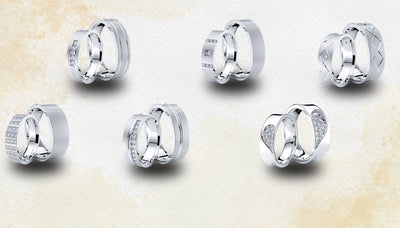
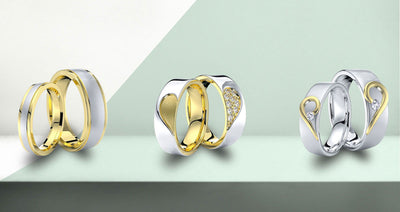
Platinum his and hers wedding bands are matching sets in 950 platinum — 95% pure platinum, among the rarest and most durable materials in fine jewelry. Naturally silver-white (no plating required), permanently hypoallergenic, extraordinarily corrosion-resistant, develops living patina over decades. At LoveWeddingBands, sets start from $980/pair — 40–60% above equivalent 14K white gold. Whether the premium is worth it depends entirely on your priorities.
What Platinum Actually Is: The Properties That Justify the Price

| Property | Platinum (950) | 14K White Gold | Notes |
|---|---|---|---|
| Purity | 95% | 58.3% | Most pure precious metal in everyday jewelry use |
| Density | 21.45 g/cm³ | ~15.5 g/cm³ | Platinum ring weighs ~40–50% more than equivalent gold ring |
| Scratch behavior | Metal shifts, not lost | Metal slightly lost per scratch | Platinum can be refinished indefinitely without thinning |
| Color | Naturally silver-white, no coating | Rhodium-plated silver-white | Platinum's color is the same at depth 50 years later |
| Maintenance | Polishing only | Rhodium replating + polishing | No coating to manage with platinum |
| Allergy safety | 100% hypoallergenic | Depends on alloy | LWB uses palladium WG = safe; nickel WG = not safe for sensitive wearers |
Price Comparison: Platinum vs. 14K White Gold Sets

| Configuration | 14K White Gold | 950 Platinum | Premium |
|---|---|---|---|
| Plain matching set (pair) | $714 | $980 | ~37% |
| Diamond 0.10 ctw (pair) | $1,100 | $1,520 | ~38% |
| Diamond 0.30 ctw (pair) | $1,850 | $2,580 | ~40% |
| Diamond 0.60 ctw (pair) | $2,900 | $4,100 | ~41% |
Long-term cost note: Over 50 years of rhodium replating ($50–$80 per replate, every 12–24 months = $1,500–$4,000 total), platinum often becomes cost-neutral at price points over $2,000 for the pair. Below $1,500, white gold's lower initial cost still wins economically.
Who Should Choose Platinum (And Who Shouldn't)

| Choose Platinum If... | Do NOT Choose Platinum If... |
|---|---|
| Confirmed nickel sensitivity — requires 100% hypoallergenic metal | Budget is the primary consideration |
| Buying over $2,000 for the pair | You want perpetually brilliant-white rings — fresh-plated white gold is slightly brighter |
| Hands-on lifestyle — zero maintenance preference | Either partner finds heavy rings uncomfortable |
| Genuinely appreciates heavier, more substantial ring as tactile experience | Managing maintenance is acceptable — white gold replating is infrequent and inexpensive |
Platinum's Patina: How the Metal Changes Over Time
Patina is the gradual accumulation of surface micro-scratches creating a diffused, satin-like appearance. Begins within the first year of daily wear, becomes consistent within 2–3 years. The ring doesn't look worn out — it looks like platinum: softly luminous silver that many jewelers consider more beautiful than high-polish. To maintain mirror finish: annual professional repolishing ($20–$40).
Frequently Asked Questions
Q: Is platinum worth the extra cost over white gold?
A: Depends on priorities. Same visual results at significantly lower cost with white gold. Platinum's value: hypoallergenic metal, no plating maintenance, greater density/weight, long-term patina appeal. The 50-year maintenance cost comparison often narrows the lifetime gap considerably.
Q: Does platinum scratch more easily than white gold?
A: Both scratch at roughly similar rates. Key difference: gold loses trace material per scratch; platinum displaces material without losing mass. Platinum can be fully refinished indefinitely.
Q: How heavy is a platinum band compared to gold?
A: A 7mm platinum dome band weighs ~40–50% more than an equivalent 14K gold band. Many love this heft; some find it distracting after a full day.
Q: Do platinum rings look different from white gold rings?
A: Side by side when new, nearly identical to most observers. Over time they diverge: white gold maintains brightness through periodic replating; platinum develops natural patina.
Q: Starting price for platinum sets at LoveWeddingBands?
A: Plain 950 platinum sets from $980/pair. Diamond platinum sets from approximately $1,520/pair. All with lifetime warranty, free sizing, 30-day returns.
Related Reading
- White Gold His and Hers Wedding Bands: The Complete Guide
- Diamond His and Hers Wedding Bands: The Complete Guide
- His and Hers Wedding Bands Under $1,000: What's Actually Available
- The Average Cost of His and Hers Wedding Bands in 2026
- The Best His and Hers Wedding Band Sets of 2026
- How to Choose His and Hers Wedding Bands: The Complete 2026 Guide