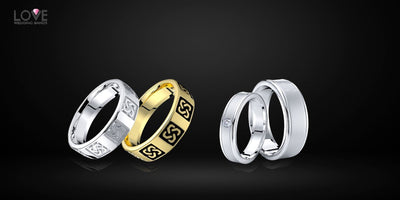
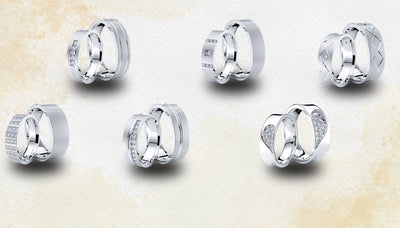
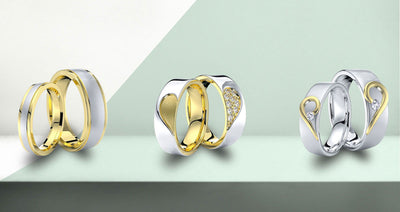
Rose gold his and hers wedding bands are matching sets crafted in 14K or 18K rose gold — an alloy of gold, copper, and silver that creates the warm blush-pink tone both partners wear. The color is built into the metal itself, not a surface coating, which means it cannot fade or chip. At LoveWeddingBands, rose gold his and hers sets start from $714 for the pair, handcrafted in our New York workshop.
Ready to compare real pairs? Shop rose gold his and hers wedding bands — or browse the complete his and hers wedding bands collection.
What Rose Gold Actually Is — and Why It Wears Differently Than Other Metals
Rose gold gets its color from copper. 14K rose gold is precisely 58.3% pure gold, 33% copper, and 8.7% silver. That formula is the same at every reputable jeweler because 14 karat is a legal purity standard in the US — and the alloy percentages follow mathematically.
The copper content does two things: it creates the warm blush-pink color, and it makes the metal slightly harder than yellow gold at the same karat. On the Mohs scale, 14K rose gold sits at approximately 3.5–4, slightly above 14K yellow gold. Over years of daily wear, rose gold holds its shape and resists denting better than yellow gold — a genuine practical advantage.
The most common fear about rose gold is that the color will fade. It won’t. The pink hue comes from the copper alloy, not a plating or coating. It cannot chip, wear off, or fade the way rhodium plating on white gold eventually does.
14K vs. 18K Rose Gold — Side-by-Side Comparison
| 14K Rose Gold | 18K Rose Gold | |
|---|---|---|
| Gold content | 58.3% | 75% |
| Copper content | 33% | ~15% |
| Color | Richer, deeper blush-pink | Lighter, more peach-toned |
| Hardness | Slightly harder | Slightly softer |
| Price | More affordable | ~30–40% more expensive |
| Best for | Everyday wear, active couples | Those wanting a subtler tone |
If you’ve fallen in love with the deep rose gold color you see in most jewelry photography, that’s 14K. Eighteen karat actually photographs lighter and reads as closer to peachy-gold in real life. Most couples choosing rose gold for its color are best served by 14K.
How to Choose a Rose Gold Matching Set That Works for Both Partners
Rose gold is the most forgiving metal for coordinating across different design styles — its warm tone reads beautifully on plain dome bands, Celtic knotwork, pavé diamonds, and hand-braided designs in a way that white gold or platinum can’t always achieve.
Who Rose Gold Is Right For
- Couples where she has a rose gold engagement ring — matching the metal is the cleaner, more intentional choice
- Partners with warm or olive skin undertones, where the warm metal creates visual harmony with the complexion
- Couples who want warmth and distinctiveness without the full traditional feel of yellow gold
- Men who want a distinctive ring without any feminine-leaning choice — rose gold men’s bands are genuine bestsellers, especially Celtic and braided styles
Who Should Reconsider Rose Gold
- Anyone with a confirmed copper allergy (rare, but the 33% copper content is a real consideration)
- Couples who want the crispest, most modern, cool-toned look — white gold or platinum read as sharper
- Partners in professions with significant chemical exposure, where copper reactivity could be a factor
Width guidelines specific to rose gold sets: Rose gold shows off surface texture and engraving particularly well, so slightly wider bands read very beautifully. For his band, 6–7mm is the sweet spot. For her band, 4mm is the most versatile — it sits flush with virtually all engagement ring profiles.
Buyer Mistake to Avoid: Selecting his and her bands from different product pages rather than the matching sets collection. Rose gold has slight color variation between different production batches. Two rose gold bands made from different alloy runs can look visibly different in warmth side by side. Buying from a matched set guarantees the rings were made from the same alloy batch.
Rose Gold and Natural Diamonds: The Optical Effect Worth Knowing
Rose gold with natural diamonds creates a specific optical effect that no other metal produces: the warm copper-tinted metal reflects a subtle rose light into the diamond, making colorless stones appear brighter and more brilliant than they look in white gold settings. This is a real, measurable phenomenon — not marketing language.
The practical implication is that you can choose a slightly lower color grade in rose gold settings and get equivalent visual beauty. We recommend G–H color natural diamonds for rose gold settings. D–F colorless stones are optically wasted in rose gold — the warm metal overwhelms colorlessness. G–H stones look exceptional, and you pay for beauty rather than a grade specification nobody can see on the finger.
Diamond Settings Available in Rose Gold His and Hers Matching Sets
- Channel-set — diamonds recessed between two parallel metal rails. Most durable option for his band. Fully protected diamonds with no protrusions. Best for active lifestyles.
- Pavé-set — small diamonds set in a surface bed of metal beads. Most brilliant option for her band. Creates continuous sparkle at minimal carat weight.
- Bezel-set — each stone surrounded by a metal collar. Most protective and most modern-looking. Works beautifully in minimalist rose gold sets.
Every diamond set at LoveWeddingBands uses natural diamonds exclusively — the real thing, formed over billions of years, not laboratory-grown stones.
See current prices and every available pair in the rose gold his and hers collection.
Frequently Asked Questions
Q: Does rose gold fade or lose its color over time?
A: No. Rose gold’s blush-pink color comes from the copper in the alloy — not from a plating, coating, or treatment. It cannot fade, chip, or wear off. After many years, routine polishing at any jeweler restores the original luster instantly.
Q: Can men wear rose gold wedding bands?
A: Absolutely — and it’s one of the most popular choices in our men’s collection. Rose gold men’s bands in Celtic knotwork, hand-braided, and carved styles are consistent bestsellers. The warm tone is confident and distinctive; men with medium-to-warm skin tones find it particularly flattering.
Q: Is rose gold more expensive than yellow gold?
A: At the same karat and weight, they’re priced very similarly. Copper is an inexpensive metal, so the alloy change doesn’t add significant cost. Any price difference between rose gold and white gold is typically because white gold requires rhodium plating during production.
Q: What skin tones does rose gold suit?
A: All of them — but it’s especially striking on olive, medium-dark, and warm golden-brown complexions. For very fair or cool-undertone complexions, white gold or platinum may read as slightly crisper, though rose gold’s warmth photographs beautifully on all skin tones.
Q: Does rose gold scratch more easily than white gold?
A: No — 14K rose gold is actually slightly harder than 14K white gold because of its higher copper content. Both metals will show micro-scratches from daily wear over time; polishing removes those scratches and restores the surface completely.
Q: What is the starting price for rose gold his and hers sets at LoveWeddingBands?
A: Rose gold matching sets start from $714 for the pair in 14K gold. Diamond-accented rose gold sets begin around $1,207 for the pair. All sets include free sizing, lifetime warranty, and 30-day returns.
Shop Our Collections
- Browse Rose Gold His & Hers Wedding Bands
- All His & Hers Wedding Bands — 150+ Styles
- White Gold His & Hers Wedding Bands
- Diamond His & Hers Wedding Bands
Related Guides
- How to Choose His and Hers Wedding Bands: The Complete 2026 Guide
- Do His and Hers Wedding Bands Have to Match? The Honest Answer
- Diamond His and Hers Wedding Bands: The Complete Guide
Next step: Explore the full rose gold his and hers collection, or view all matching wedding band sets — handcrafted in NYC with lifetime warranty.