Gold and platinum are both excellent, lifelong wedding-band metals; the difference is that gold offers more color choice and a lower price, while platinum is denser, naturally hypoallergenic, and never needs plating. Choose gold if you want yellow, white, or rose tones and the best value, especially 14K for everyday wear. Choose platinum if you have sensitive skin, want the most substantial feel, or are setting diamonds. Both last a lifetime with care — the decision is about color, feel, and budget, not quality.
Gold versus platinum is the classic wedding-band question, and it's a good one, because these are the two metals most couples ultimately choose between. They're both precious, both durable, and both will last a lifetime — so this isn't about one being "better," but about which suits you. This guide compares them head to head on every factor that matters: durability, weight, color, skin sensitivity, price, maintenance, and resale, then helps you decide. For the wider view of every metal option, see our wedding band metals guide; this page zeroes in on the two headline choices.
1. The basics: what each metal is
A quick grounding makes the comparison clearer. Gold is a naturally soft, warm-yellow metal that's mixed with alloys for strength; the karat number (10K, 14K, 18K) tells you how much pure gold it contains, and the alloy determines whether it's yellow, white, or rose. Because it's alloyed, gold gives you enormous choice in both color and price point.
Platinum is a naturally white precious metal, used at around 95% purity — far purer than any gold alloy — yet it stays durable because platinum is dense and tough by nature. It needs no alloying to be white and no plating to stay that way. That purity and density are the roots of nearly every practical difference between the two, as you'll see below.
2. Gold vs platinum at a glance
Here's the head-to-head on the factors couples weigh most. Read on below for the detail behind each row.
| Factor | Gold (14K/18K) | Platinum |
|---|---|---|
| Color | Yellow, white, or rose | Naturally white only |
| Purity | 58.3% (14K) / 75% (18K) | ~95% |
| Scratch resistance | Harder surface (esp. 14K) | Shows fine scratches, forms patina |
| Toughness | Excellent | Exceptional — holds stones best |
| Weight/feel | Lighter | Noticeably heavier, substantial |
| Hypoallergenic | Good (higher karat = gentler) | Excellent (naturally) |
| Maintenance | White gold needs re-plating | Optional polish; never plated |
| Price | More affordable | Premium |
3. Durability and scratch resistance
This is where a common misconception trips people up. Both metals are durable, but they behave differently. Gold, especially lower karats like 14K, has a harder surface, so it resists fine scratching slightly better day to day. Platinum is actually a little softer on the surface and will show fine scratches sooner — but here's the crucial difference: when gold scratches, tiny amounts of metal are lost; when platinum scratches, the metal is merely displaced, not lost, forming that characteristic patina. Over decades, a platinum band retains more of its original metal, which is why it's considered the more enduring heirloom.
For holding diamonds and gemstones securely, platinum's toughness wins clearly — its prongs and settings resist bending and wear better than gold's, which is why fine diamond-set bands are so often platinum. If you're choosing a plain band and want the hardest surface for an active lifestyle, 14K gold is the pragmatic pick; if you want the toughest metal that never truly wears away, platinum earns its reputation.
4. Weight and feel
Pick up a platinum band and a gold band of the same design and you'll feel the difference immediately: platinum is significantly denser, so it has a satisfying heft that many wearers associate with quality and permanence. Gold feels lighter and, to some, more comfortable for all-day wear, particularly in wider bands.
Neither is right or wrong — it's genuinely personal. Some people love platinum's substantial presence on the finger; others prefer gold's easy lightness and barely notice it's there. If you can, try both on before deciding, because this is one factor that words can't fully convey. Width and profile also affect how a band feels, which our wedding band buying guide covers in detail.
5. Color and patina
Color is often the deciding factor, and here gold's versatility is its trump card. Gold comes in warm yellow, bright white, and romantic rose, so you can match your skin tone, your partner's ring, or simply your taste. Platinum offers one color — a naturally cool, bright white — but it's a beautiful, permanent white that never fades or shifts, which is a genuine advantage over white gold.
That last point matters if you want a white metal specifically. White gold achieves its bright finish through rhodium plating that gradually wears and needs refreshing every year or two; platinum is white all the way through and never needs re-plating. Over a lifetime, platinum develops its soft matte patina (polishable back to a shine anytime), while yellow and rose gold keep their warm color permanently with no plating at all. If a bright white metal is your goal, this is the clearest reason some couples pay the platinum premium.
Shop his and hers wedding bands →6. Hypoallergenic and sensitive skin
If sensitive skin is a concern, platinum has the edge. It's used at high purity and is naturally hypoallergenic, so it's the safest choice for anyone prone to reactions or with a known nickel allergy. Gold is generally well tolerated too, and the higher the karat the gentler it is — 18K contains more pure gold and less alloy than 10K — but some white gold is alloyed with nickel, which can cause reactions in sensitive wearers.
The practical takeaway: if either of you has ever reacted to jewelry, platinum removes the worry entirely. If you prefer gold, choose a higher karat or ask for a nickel-free white gold alloyed with palladium. Yellow and rose gold rarely cause problems. For lifestyle-based guidance across both metals, our best metal for wedding bands guide is a useful companion.
7. Price and resale
Gold is the more affordable choice, and by a meaningful margin. Platinum costs more for two reasons: it's denser, so the same ring contains more precious metal by weight, and it requires more skill to work. Within gold, price rises with karat, so 10K and 14K stretch a budget furthest while 18K sits closer to platinum in feel and cost. If budget is the priority, 14K gold delivers beautiful color and everyday durability for less.
On resale, both are precious metals with intrinsic value, but a wedding band is rarely bought as an investment — its worth is sentimental far more than financial, and resale prices for any worn jewelry fall well short of retail. Don't let resale drive the decision; choose the metal you'll love wearing. For ways to manage cost across two rings, see our affordable wedding bands for couples guide.
8. Maintenance over time
Both metals are easy to live with, but their upkeep differs in one key way. Yellow and rose gold need only occasional cleaning and a rare polish — no plating, ever. White gold is the higher-maintenance option, needing rhodium re-plating roughly every one to two years to keep its bright finish. Platinum never needs plating; it only needs an optional polish if you prefer a mirror shine over its natural patina.
So the low-maintenance winners are yellow gold, rose gold, and platinum; white gold is the one that asks for periodic professional attention. Whichever you choose, the day-to-day care is the same simple routine — warm water, mild soap, a soft brush — covered fully in our how to clean wedding bands guide.
9. Which should you choose?
Bring it down to what you value most. Choose gold if you want a choice of colors, the best value, or a lighter feel — with 14K the confident everyday default and 18K for the richest color. Choose platinum if you want a permanently bright white metal, the most substantial feel, guaranteed hypoallergenic comfort, or the most secure setting for diamonds. Both will serve you beautifully for a lifetime.
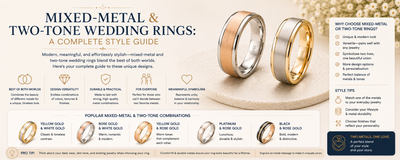
And remember you and your partner don't have to choose the same metal — mixing gold and platinum, or two colors of gold, between two bands is stylish and increasingly popular. If you're coordinating a pair, our matching bands guide shows how to combine metals well, and our collection of his and hers wedding bands is full of ideas. Ready to browse by metal? See our gold wedding bands and platinum wedding bands collections.
Explore platinum wedding bands →10. Frequently asked questions
- Is gold or platinum better for a wedding band?
- Neither is better overall — both last a lifetime. Gold offers more color choice and better value; platinum is denser, naturally hypoallergenic, permanently white, and holds diamonds best. The right choice depends on color preference, skin sensitivity, feel, and budget.
- Is platinum more durable than gold?
- Both are durable but differently. Gold (especially 14K) resists surface scratches slightly better, while platinum shows fine scratches but loses no metal — it forms a patina instead — making it the more enduring heirloom and the best for holding stones.
- Why is platinum more expensive than gold?
- Platinum is denser, so a ring contains more precious metal by weight, and it takes more skill to work. Gold, especially 10K and 14K, is more affordable while still beautiful and durable.
- Does platinum or white gold stay white?
- Platinum is naturally white forever and never needs plating. White gold is rhodium-plated and needs re-plating every one to two years to stay bright. If a permanently white metal matters most, platinum has the edge.
- Which is better for sensitive skin?
- Platinum — it's naturally hypoallergenic and the safest choice for nickel allergies or sensitive skin. Higher-karat gold and nickel-free palladium white gold are good gold options.
- Can I mix gold and platinum in a matching set?
- Yes — mixing metals between two bands is stylish and popular. See our matching bands guide for how to combine them, and browse his and hers wedding bands.