
Silicone vs Metal Wedding Bands: Which Is Right for You?
Shopping, not reading?
Skip ahead and browse the full wedding band collection.
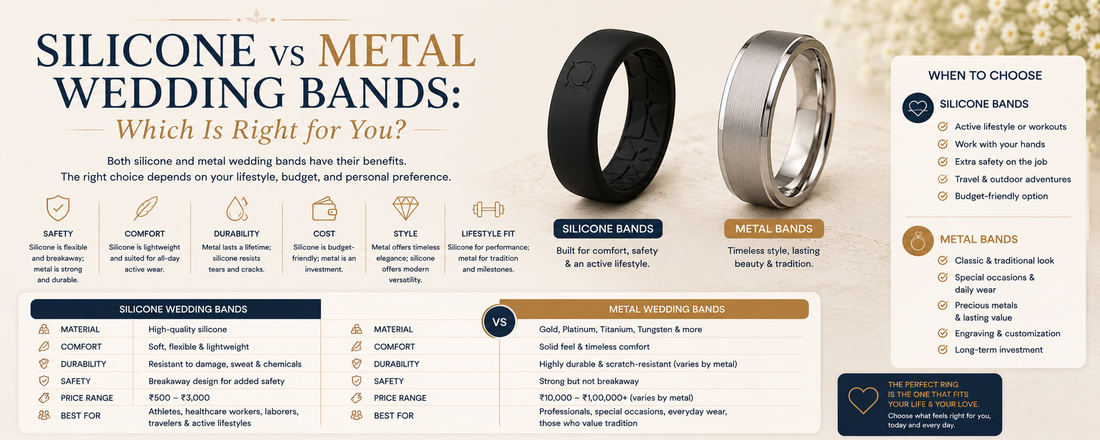
If you've spent any time comparing wedding bands lately, you've probably noticed a newer option sitting right next to the gold and platinum: silicone rings. They're bright, rubbery, cheap, and marketed hard toward athletes, tradespeople, and anyone who works with their hands. Meanwhile, the metal wedding band you probably pictured when you got engaged — gold, platinum, tungsten, titanium — is still the traditional choice for a reason. So which one is actually right for you?
The honest answer is that it depends on how you live, work, and think about what a wedding band represents. Silicone and metal solve different problems, and for a growing number of couples, the smartest answer isn't "either/or" — it's both, worn for different parts of life. Below, we'll walk through exactly how silicone and metal wedding bands compare on durability, safety, hygiene, appearance, cost, and long-term value, so you can decide with your eyes open.
This comparison has gotten more common in the last several years as silicone rings have gone from a niche safety product to a mainstream wedding accessory sold everywhere from hardware stores to big-box retailers. That popularity has also led to a lot of one-sided marketing — silicone brands understandably lean hard on the safety angle while glossing over durability, appearance, and value, and traditional jewelers don't always give silicone credit for the real problem it solves. Our goal here is to give you the balanced, factual version: real pros and real limitations on both sides, from people who work with fine metal every day but also understand exactly why silicone exists.
Which is better, silicone or metal wedding bands? For most couples, a fine metal band (gold, platinum, tungsten, or titanium) is the better primary wedding ring — it holds its value, can be resized and engraved, and looks appropriate for work, weddings, and everyday formal life. Silicone bands are a smart secondary option for the gym, manual labor, or swimming, but they wear out, can't be resized, and hold no resale value.
What Are Silicone Wedding Bands?
Silicone wedding bands are exactly what they sound like: a ring-shaped band molded from medical-grade or food-grade silicone rubber instead of metal. They first became popular in industries where a traditional ring posed a real safety hazard — electricians, mechanics, firefighters, gym owners, and warehouse workers were early adopters, and the category exploded from there into mainstream wedding jewelry.
The core engineering idea behind silicone bands is the "breakaway" design. Because silicone is soft and has relatively low tensile strength compared to metal, a properly designed silicone ring is built to stretch, tear, or snap apart under a sudden, significant force — like when a ring gets caught on machinery, a bar, or a piece of equipment — rather than staying rigidly closed around the finger. That's the entire safety pitch in a nutshell, and it's a legitimate one worth taking seriously.
Silicone bands are also inexpensive, typically ranging anywhere from $10 to $40 per ring, sometimes sold in multi-packs of different colors. They're lightweight, waterproof, and don't tarnish, which makes them popular for the gym, rock climbing, swimming, and outdoor work. Some brands add texture, faceted edges, or metallic-look coatings to make them look less like a rubber band and more like a "real" ring — with mixed success, which we'll get into later.
What Metal Wedding Bands Offer That Silicone Can't
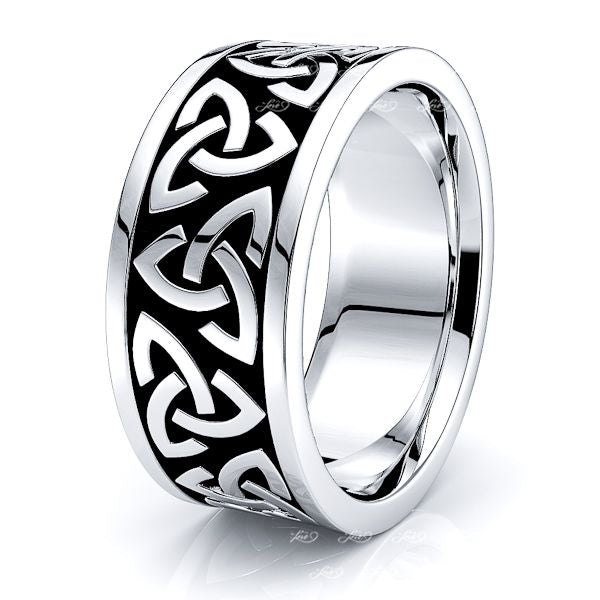
Metal wedding bands — gold, platinum, tungsten, titanium, and hand-crafted styles like braided or Celtic designs — represent a completely different value proposition. Where silicone is designed to be disposable and replaceable, a metal band is designed to be permanent. That single difference in intent shapes almost every other comparison point in this guide.
A well-made metal band is a piece of fine jewelry, not a consumable. It can be engraved with a date, initials, or a private message. It can be resized up or down as your finger changes over the decades — after weight changes, pregnancy, or simply aging. It can be professionally cleaned, polished, and restored to look new again after ten, twenty, or fifty years. None of that is true of silicone, which is manufactured as a single-use-lifespan product from day one.
Metal also carries real craftsmanship and material value. A solid gold or platinum band is cast or hand-forged from precious metal that has intrinsic worth — the kind of worth that shows up if you ever need to insure, appraise, sell, or pass the ring down. Comfort-fit designs close that gap even further on the "practical wear" side: a piece like the pairs the rounded, easy-slide interior people love about silicone with the permanence and resale value only solid metal can offer, starting at a genuinely accessible $248.
Finally, metal simply reads as more formal. At a wedding, a client dinner, a job interview, or any occasion where appearances matter, a polished metal band signals commitment and intention in a way a rubber ring generally doesn't — more on that in the appearance section below.
Durability & Lifespan Comparison
This is where the two materials diverge the most sharply. A quality metal wedding band, properly cared for, can last a lifetime — often multiple lifetimes. It's not unusual for a couple to eventually pass down a wedding band to a child or grandchild, decades after the original wedding day, after a simple resizing and polish. Harder metals like tungsten and titanium resist scratching almost entirely under normal wear, while gold and platinum can be re-polished indefinitely if they pick up surface marks over the years. If you want a deeper look at how the toughest metal options stack up against each other for active, hands-on lifestyles, our Tungsten vs Titanium Wedding Bands guide breaks it down in detail.
Silicone, by contrast, is a wear item. UV exposure, chlorine, soap, friction, and everyday stretching gradually degrade the material — it can discolor, stretch out of shape, develop small tears, and lose its grip and elasticity. Most silicone ring manufacturers themselves recommend replacing a band every six months to two years, depending on how hard it's worn. There's no polishing, resizing, or repairing a silicone ring back to its original condition; when it wears out, you throw it away and buy another one. Over a marriage that lasts decades, that's a lot of rings in landfills compared to the single metal band that outlasts them all. Some wearers also notice their silicone band gradually loosens or develops a slightly tacky texture well before it visibly tears, which is usually a sign it's due for replacement even if it still looks wearable at a glance.
Safety Comparison: Ring Avulsion vs. Breakaway Design
Let's address the safety argument directly, because it's the strongest and most legitimate case silicone advocates make. "Ring avulsion" is the medical term for an injury that happens when a ring gets caught on something — a piece of machinery, a ladder rung, a moving part, a chain-link fence — and the sudden force degloves or amputates the finger because the metal band won't give way. It's a real injury that occurs in trades like construction, manufacturing, electrical work, forestry, and certain athletic activities, and it's the entire reason the breakaway silicone ring category exists. If your job or hobby regularly puts your hands near moving machinery, this risk deserves real consideration.
That said, a few important nuances get lost in silicone marketing. First, comfort-fit metal bands with correctly sized, rounded profiles are meaningfully safer than the tight, sharp-edged rings of decades past — our Comfort-Fit vs Standard-Fit Wedding Bands guide explains how modern interior shaping reduces snagging and pinching risk. Second, many high-risk employers — electrical utilities, heavy manufacturing, some medical and food-service settings — simply require no rings of any kind on the job, metal or silicone, because any ring can catch on equipment or violate hygiene protocol. In those environments, the real solution isn't a different ring, it's no ring at all during shift hours. Third, some metal band styles are designed with quick-release or hinged mechanisms specifically for high-risk trades, giving you metal's permanence with an added safety valve.
The realistic takeaway: if you work extensively around exposed machinery, moving parts, or heavy equipment, a breakaway silicone band (or simply removing your ring) during those specific hours is a smart, low-cost safety habit. It doesn't mean you need to give up a proper metal wedding band for the other 95% of your life.
Hygiene Considerations
Hygiene is an underrated part of this comparison. Metal is nonporous — dirt, soap residue, and bacteria sit on the surface, where a quick wipe, soak, or professional cleaning removes them completely. That's a big part of why jewelers recommend an occasional deep clean; see our How to Clean & Care for Your Wedding Bands guide for a simple at-home routine that keeps a metal band looking new indefinitely.
Silicone behaves differently. It's a soft, slightly porous material that sits directly against warm, often sweaty skin, and over weeks of continuous wear — especially in the gym or on the job — it can trap moisture, soap film, and bacteria in a way polished metal doesn't. Wearers who don't remove and wash their silicone ring regularly sometimes report odor buildup or mild skin irritation, particularly with lower-quality silicone that isn't medical-grade. This isn't a dealbreaker for occasional or activity-specific wear, but it's a legitimate consideration for anyone thinking about wearing silicone as an everyday, all-day ring rather than an occasional swap-in. If you do keep a silicone band in regular rotation, the fix is simple: take it off at night, rinse it with soap and water every few days, and let it fully air-dry before putting it back on — the same basic hygiene habit that keeps any close-fitting accessory from becoming a problem. Metal bands are far more forgiving here; a quick rinse under warm water with a drop of mild soap, followed by a soft-cloth dry, is typically all a gold, platinum, tungsten, or titanium band ever needs between professional cleanings.
Appearance & Formality
Silicone bands read as casual and athletic — which is exactly what they're designed for. They come in solid colors, sometimes with a faceted or textured finish meant to mimic a metal look, but up close (and especially in photos) most silicone rings are still fairly easy to identify as rubber rather than fine jewelry. That's not a flaw; it's simply a different design goal, aimed at function over formality.
A polished metal band, on the other hand, is built to read as fine jewelry in any setting — a wedding, a black-tie event, a client meeting, a job interview, or just daily life. It catches light, shows genuine craftsmanship in its finish and edges, and visually signals the kind of long-term commitment a wedding ring is meant to represent. Details like a beveled edge or knife-edge profile — seen in a piece like the — add exactly the kind of refined, dimensional detailing that no silicone band can replicate, because it depends on precision metalwork, not a rubber mold.
Cost Comparison
On sticker price alone, silicone wins easily — most silicone bands cost between $10 and $40, compared to several hundred dollars or more for a quality metal band. But sticker price is only half the financial picture. Because silicone needs replacing every one to two years, the real lifetime cost adds up: over a 30-year marriage, that could mean 15-30 replacement purchases.
Metal, by comparison, is typically a one-time purchase. A well-chosen band in the $250-$700 range — like several of the comfort-fit options in our Men's Wedding Bands collection — can realistically be the only wedding band you ever need to buy, assuming normal care and the occasional professional polish. If budget is the main concern, it's worth comparing options directly in our Affordable His & Hers Wedding Bands Under $500 guide before assuming metal is out of reach — there are genuinely affordable, durable choices at nearly every price point.
Resale & Sentimental Value
This is one of the starkest contrasts between the two materials. Silicone rings have essentially zero resale or trade-in value — they're a manufactured consumable with no precious material content, so there's no market for a used one, and no realistic way to pass one down as an heirloom. When it wears out, it goes in the trash.
Metal wedding bands are different. Gold and platinum bands contain genuine precious metal value that can be appraised, insured, and in many cases traded in or resold decades later. Just as importantly, a metal band can become a family heirloom — the kind of ring a grandchild wears one day, engraved with a date that still means something. If long-term value matters to you as part of the wedding band decision, our Do Wedding Bands Hold Their Value? guide goes deeper into how different metals perform over time.
Who Should Choose Silicone, Metal, or Both? A Quick Decision Framework
If you're still torn, it often helps to think in terms of your actual week rather than the ring in the abstract. Here's a practical, honest breakdown of who tends to be happiest with each option.
Silicone tends to make sense if:
- You work directly with exposed machinery, power tools, or moving equipment on a regular basis
- You're an avid weightlifter, climber, or swimmer and want a ring that can't scratch a barbell or a pool wall
- You travel frequently and want a low-value ring on hand for higher-risk situations
- You're on a very tight budget for a "second ring" and don't mind replacing it periodically
A metal wedding band tends to make sense if:
- You want one ring that works for your entire life — work, weddings, formal events, and everyday wear
- Long-term value, resale, or the idea of an heirloom ring matters to you or your partner
- You want the option to resize or engrave your ring down the road
- You spend most of your week in an office, retail, healthcare, hospitality, or similar setting without heavy exposed machinery
Both makes sense if: you fall into a mix of the two — say, an office job most days but a serious gym habit, or a desk job with the occasional weekend project around the house. That's the majority of couples, which is exactly why the two-ring strategy below has become such a common, practical recommendation among jewelers.
The Two-Ring Strategy: The Practical Answer for Many Couples
Here's the thing — this doesn't actually have to be an either/or decision, and plenty of practical, sensible couples land on exactly that conclusion. It's a common enough approach that many fine jewelers, including us, recommend it outright: wear your primary metal wedding band for daily life, formal occasions, and the vast majority of your marriage — then keep an inexpensive silicone band on hand as a "beater ring" for the specific situations where it genuinely makes sense, like an intense gym session, a day of manual labor, a swim, or international travel where you'd rather not risk your real ring.
This approach gets you the best of both materials without compromising on either. Your metal band stays protected from the exact activities that would scratch, dent, or put it at avulsion risk, while still being the ring you actually wear, show off, and eventually pass down. Meanwhile, the silicone band absorbs all the wear and tear from higher-risk situations, and because it costs so little, replacing it every year or two is a non-issue.
For the "primary metal ring" side of that strategy, look for a band that's already built for an active lifestyle: durable materials, a comfort-fit interior, and a finish that can handle daily wear without needing constant babying. The and the are both solid, comfort-fit options designed to hold up to real daily life while still looking like the fine wedding band it's meant to be — freeing you up to reach for a cheap silicone band, or simply take your ring off, on the handful of days each year when a rubber "beater ring" genuinely makes more sense.
Silicone vs Metal Wedding Bands: Comparison Table
Here's the full comparison side by side, across the factors that matter most when you're actually deciding.
| Factor | Silicone Wedding Bands | Metal Wedding Bands |
|---|---|---|
| Durability / Lifespan | Degrades, stretches, and typically needs replacing every 1-2 years | Can last a lifetime (or generations) with basic care |
| Safety | Breakaway design reduces ring avulsion risk around machinery | Comfort-fit and proper sizing reduce risk; removable for high-risk tasks |
| Hygiene | Porous material can trap bacteria, moisture, and odor over time | Nonporous, easy to clean, resists odor buildup |
| Appearance / Formality | Casual, athletic look; not suited to formal settings | Formal, traditional, appropriate for any occasion |
| Customization | Cannot be resized or engraved | Can be resized and engraved by a jeweler |
| Cost | $10-$40, but recurring every 1-2 years | Typically $250+, but usually a one-time purchase |
| Resale / Heirloom Value | None — no precious material content | Retains real value; can be appraised, insured, or passed down |
| Best For | Gym, manual labor, swimming, travel backup | Daily wear, formal occasions, long-term commitment |
Expert Tip
Our jewelers' honest recommendation: choose your metal wedding band first, based on what you'll be proud to wear and pass down, and treat a silicone band as an optional accessory rather than a replacement. If your daily routine includes real hazards — heavy machinery, frequent weightlifting, manual trades — keep a silicone band nearby for those specific hours, and make sure whichever metal band you choose has a properly fitted comfort-fit interior sized by a professional. That single choice does more for everyday safety and comfort than switching materials entirely. It's also worth having this conversation with your partner before the wedding, not after — deciding together whether you're a one-ring household or a two-ring household saves an awkward conversation down the road when one of you shows up to a job site or a gym in a band the other assumed would stay on the nightstand.
Related Collections
If you've decided a durable, comfort-fit metal band is the right primary ring for your lifestyle, browse our full Wedding Bands collection, our dedicated Men's Wedding Bands collection, or our Classic Comfort-Fit Wedding Bands collection for styles built specifically around all-day comfort and everyday durability.
Still deciding between materials? Start with our metal comparison guides — Tungsten vs Titanium for the toughest, most scratch-resistant options, or Best Metal for Wedding Bands for a full rundown of gold, platinum, and everything in between. Whichever metal you land on, a properly sized, comfort-fit band from LoveWeddingBands is built to be worn — and worn well — for the rest of your life.
Shop Wedding Band Collections
Explore our most-loved styles, from classic comfort-fit bands to modern two-tone designs.
All Wedding Bands
Browse our full collection of fine metal wedding bands for every style and budget.
300+ Styles
Men's Wedding Bands
Durable, comfort-fit metal bands built for everyday wear, work, and the gym.
150+ Styles
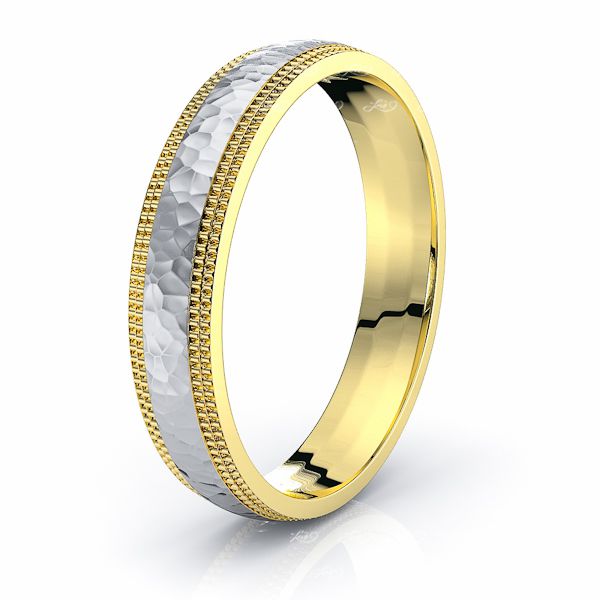
Classic Comfort-Fit Bands
Rounded interiors that slide on smoothly and wear comfortably all day long.
50+ Styles
Two-Ring Strategy Picks
Affordable, tough everyday metal bands to pair with your primary ring.
Shop Now
Bestselling His & Hers Sets
View all-
Ryan Trinity Knot Mens Celtic Wedding Band
$1,255.00From$941.25Sale -
Noah Hand Woven Mens Wedding Ring
$657.00From$492.75Sale


Talk to a Wedding Band Expert
Talk to a Wedding Band Expert
Have a question about sizing, metals, or engraving? Our specialists are happy to help — no pressure, just honest advice.
Send Us a Quick Question
Fill out the form below and one of our wedding band experts will get back to you within one business day.
Frequently Asked Questions
Is it safe to wear a silicone ring at work?
Do silicone rings look cheap?
How long do silicone wedding bands actually last?
What is ring avulsion, and how serious is the risk with metal bands?
What is the two-ring strategy, and is it worth doing?
Do silicone wedding bands hold any resale or trade-in value?
How much should I budget for a metal wedding band vs a silicone one?
Is it safe to buy a wedding band online, metal or silicone?
Explore by Topic
Browse related guides, collections, and buying tips — organized to help you find exactly what you need next.