
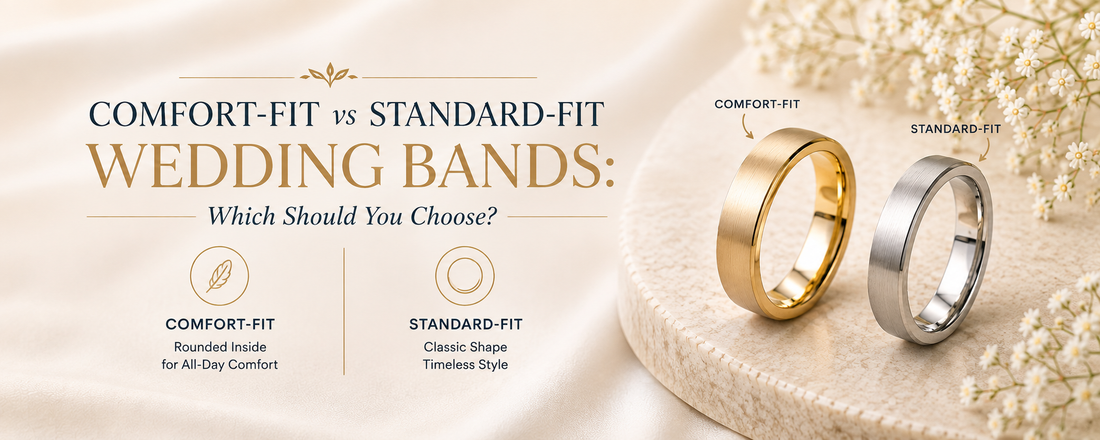
Comfort-Fit vs Standard-Fit Wedding Bands: Which Should You Choose?
Shopping, not reading?
Skip ahead and browse the full wedding band collection.
If you've started ring shopping, you've probably noticed that almost every wedding band description mentions a "fit" — usually either comfort fit or standard fit. It sounds like a minor spec, buried somewhere below metal and width, but it's actually one of the decisions that shapes how a ring feels on your hand every single day for the rest of your life. Get it right, and you forget you're wearing a ring by the end of the first week. Get it wrong, and you're tugging at your finger during dinner, wondering why the band that looked perfect online feels tight, heavy, or oddly bulky in person.
At LoveWeddingBands, comfort fit and standard fit are the two foundational profile options behind nearly every ring we make, from a simple men's wedding band to a delicate women's wedding band. This guide breaks down exactly what separates the two profiles, how each one affects sizing, comfort, durability, price, and resizing, and which one is the smarter choice for your hand, your lifestyle, and your ring style. By the end, you'll be able to walk into (or click into) any ring listing and know immediately which fit is right for you.
What's the Difference Between Comfort Fit and Standard Fit?
Comfort-fit rings have a rounded, domed interior that curves outward at the center, so less metal actually touches your finger and the ring glides on and off more easily. Standard-fit rings have a flat interior that meets your skin evenly along its full width, giving a more traditional, snug feel. Comfort-fit bands typically run about a half-size smaller than standard-fit bands of the same marked size.
What Is a Comfort-Fit Wedding Band?
A comfort-fit wedding band is milled or cast with a gently rounded, dome-shaped interior — picture the inside of the ring bulging slightly outward toward your finger, rather than sitting flat against it. Because the curve is highest at the center of the band's interior and tapers off toward the edges, only a small rounded strip of metal actually makes contact with your skin at any given moment.
That single design detail changes the entire experience of wearing the ring in three practical ways:
- It slides on and off more easily. The rounded interior reduces friction against your knuckle, so the ring doesn't "grab" on the way over it the way a flat-interior band can.
- It feels lighter on the finger than its actual weight suggests. Because less surface area touches your skin, comfort-fit rings often feel less bulky than a standard-fit ring of the same outer width, even though comfort-fit bands typically weigh slightly more overall.
- It moves and rotates more freely. The rounded underside lets the ring pivot naturally as your hand flexes, which is part of why comfort-fit is the default recommendation for people who work with their hands or wear a ring for the first time.
The manufacturing process reflects this too. Comfort-fit bands are typically cast or milled with the interior curve built into the design from the start, then hand-finished and polished along that curve — a step that takes more time on the bench than finishing a flat interior. That extra finishing work is one reason comfort-fit became a premium option decades ago before turning into today's standard recommendation for everyday wear across nearly every jeweler, including ours.
Comfort-fit construction is available across nearly every style we carry, including domed profiles, flat-topped hybrids, tapered edges, and contemporary bevels — proof that "comfort fit" describes the interior shape, not a limitation on the outer design.
What Is a Standard-Fit Wedding Band?
A standard-fit wedding band (sometimes called a traditional-fit or flat-fit band) has a flat, even interior that runs the full width of the ring. Instead of a rounded curve, the inside surface sits parallel to your finger, meeting your skin evenly across the entire band width.
Standard-fit bands are the classic, time-tested profile — this is what most wedding rings looked like for generations before comfort-fit machining became widely available. A few characteristics define the standard-fit experience:
- A more structured, traditional feel. Because the full width of the band contacts your skin, a standard-fit ring feels more "present" and evenly balanced, which some wearers genuinely prefer, especially with wider bands or intricate engraved and vintage-inspired designs.
- True-to-size fit. Standard-fit rings size exactly to the measurement on a standard ring sizer, with no adjustment needed.
- Best support for detailed interior engraving. A flat interior gives engravers a clean, even surface, which is why standard fit is often chosen for bands with long personalized inscriptions.
- Slightly more resistance going over the knuckle. Because the full interior surface makes contact as the ring passes your knuckle, standard-fit bands can feel snugger on the way on and off compared to a comfort-fit ring in the same size.
Standard fit tends to be the preferred choice for wearers who want a completely flat, no-frills interior, for vintage and antique-style reproductions, and for anyone who simply grew up wearing (or seeing) a traditional band and wants that familiar feel again.
It's also worth noting that "standard fit" doesn't mean "basic." Many of our most detailed hand-engraved, milgrain, and vintage-reproduction bands are built on a standard-fit profile specifically because the flat interior keeps the ring's proportions and pattern work consistent all the way around. If your inspiration photo is an antique family ring or a heritage-style design, there's a good chance the original was standard-fit, and matching that construction will get you the closest feel to the original.
Sizing Differences: Do Comfort-Fit Rings Run Smaller?
This is genuinely one of the most important — and most searched — practical questions in ring shopping, and the answer is yes, in a specific, predictable way. Because a comfort-fit ring's rounded interior bulges inward slightly at the center, that dome effectively reduces the usable interior diameter compared to a standard-fit band stamped with the same size number. In real terms, this means a comfort-fit ring in your usual size will often feel a touch tighter than a standard-fit ring in that same size.
The general rule of thumb our jewelers use: order a comfort-fit ring about a half size down from the size you'd choose in a standard-fit band to get an equivalent feel — though this varies slightly by band width and metal, which is exactly why we recommend getting sized in person or with an at-home sizer specifically for the width and fit you're ordering, not relying on a size from a completely different ring. Our full ring sizing guide walks through at-home measuring methods, how width changes sizing, and how to account for knuckle size versus finger base size — all details that matter even more once you're choosing between fits.
A related sizing wrinkle: wider bands amplify both effects. A wide comfort-fit ring will run smaller relative to its stated size than a narrow comfort-fit ring, and a wide standard-fit ring will feel snugger over the knuckle than a narrow one. If you're deciding on width at the same time as fit, our wedding band width guide covers how millimeter width and comfort-fit rounding interact, since the two decisions really should be made together rather than separately.
If you're sizing at home, the most reliable approach is to test with a physical ring sizer set — a set of sample rings you can actually slide on — rather than a printable paper chart, since paper strips can't replicate how a rounded comfort-fit interior feels against your knuckle. Try the sizer at the end of the day, when fingers are naturally at their largest, and on the hand you'll actually wear the ring on, since dominant and non-dominant hands frequently differ by a quarter size or more. If you already own a comfort-fit ring in a size you love, that number is a great starting point for another comfort-fit purchase — but don't reuse it directly for a standard-fit order without adjusting up roughly half a size, and vice versa.
Who Should Choose Comfort-Fit?
Comfort-fit is the right call for most everyday wedding band wearers, and it's the profile we recommend by default for a few specific groups:
First-time ring wearers
If you've never worn a ring daily before, comfort-fit removes a lot of the "getting used to it" adjustment period. The rounded interior means less surface friction, so the ring feels less noticeable during the first weeks of wear, when most people are hyper-aware of anything new on their hand.
People with arthritis or finger sensitivity
Because comfort-fit distributes pressure differently and doesn't grip the finger evenly along the full band width, it tends to be gentler on joints that are swollen, sensitive, or affected by arthritis. Many wearers with joint conditions find comfort-fit is the only profile they can wear comfortably for a full day.
Larger knuckles relative to the base of the finger
If your knuckle is noticeably larger than the base of your finger — a very common and totally normal proportion — a comfort-fit ring's rounded interior will glide over that knuckle far more easily than a standard-fit band, which can otherwise feel like it "catches" every time you put it on or take it off.
Anyone who works with their hands
Tradespeople, gym-goers, and anyone who takes their ring on and off multiple times a day for work or safety reasons tend to prefer comfort-fit for the sheer ease of removal and replacement.
Browse our full range of comfort-fit styles in the Classic Comfort-Fit Wedding Bands collection, where every ring is built on this rounded-interior profile.
Who Should Choose Standard-Fit?
Standard-fit isn't a "budget" or "lesser" option — it's a genuinely different feel that plenty of wearers prefer outright. It tends to be the better choice for:
Wearers who want a completely flat interior feel
Some people simply prefer the structured, evenly-balanced sensation of a flat interior surface. There's no objectively "correct" answer here — it comes down to personal preference and what feels natural on your specific hand.
Vintage, antique, and heirloom-style reproductions
Because standard-fit is the traditional, historical profile, it's the natural choice for rings designed to evoke a vintage or antique aesthetic, or for reproductions of a family heirloom band.
Bands with detailed interior engraving
A flat interior surface is easier to engrave cleanly, especially for longer personal inscriptions, dates, or coordinates, since there's no curve distorting the lettering.
Shoppers prioritizing exact size-for-size consistency
If you're matching a standard-fit ring to another standard-fit ring you already own — say, for a matching couples set — sticking with standard fit on both keeps the sizing logic simple and consistent.
Durability & Metal Usage: Does Comfort-Fit Use More Metal?
Yes — and this is a detail that surprises a lot of first-time buyers. Because a comfort-fit band's interior domes outward, the band is actually thicker through its cross-section at the center than a standard-fit band of the same outer width. That extra volume of metal has a few downstream effects:
- Slightly higher weight. A comfort-fit ring in 14K gold or platinum will typically weigh a bit more than a standard-fit ring of identical outer width and metal, simply because there's more material in the cross-section.
- Slightly higher price. Since wedding bands in precious metals are priced partly by metal weight, that extra volume can translate to a modestly higher price for a comfort-fit version of the same design — a detail worth knowing if you're comparing two otherwise-identical listings and wondering why the price differs. Our budget wedding bands guide covers more ways ring specs quietly affect price.
- Comparable long-term durability. Despite the different profile, comfort-fit and standard-fit bands in the same metal hold up equally well over decades of wear — the extra metal in a comfort-fit ring doesn't make it more or less durable, it primarily changes weight, feel, and price rather than lifespan.
Metal choice still matters more than fit profile when it comes to long-term durability and scratch resistance. If you haven't settled on a metal yet, our guides on gold vs. platinum, tungsten vs. titanium, and best metal for couples break down how each metal performs over years of daily wear, independent of which fit profile you choose.
The price and weight gap between comfort-fit and standard-fit also scales with the metal itself. In platinum, which is denser and priced at a premium per gram, the extra metal volume in a comfort-fit band shows up as a slightly larger difference than the same comparison would show in 14K gold. In lighter alternative metals like titanium, the difference in both weight and price is barely noticeable. If budget is a primary factor in your decision, our budget wedding bands guide has more detail on how these small spec choices add up across an entire order, especially for couples buying two bands at once.
Resizing Considerations: Comfort-Fit vs Standard-Fit
Resizing is another area where the two profiles genuinely diverge, and it's worth understanding before you buy — especially if your finger size might change over time.
Standard-fit rings are generally the easier and less expensive of the two to resize. Because the band has a consistent, flat cross-section, a jeweler can cut, stretch, or add metal to adjust the size with a fairly standard, predictable process, whether the ring needs to go up or down a size or two.
Comfort-fit rings are resizable too, but the process takes more skill and, in many cases, more cost and time. Because the interior curve has to be preserved and re-shaped to match the new circumference, a jeweler experienced with comfort-fit construction is essential — an inexperienced resize can flatten or distort the dome and undo the very feature you bought the ring for. Comfort-fit bands with mixed metals, inlays, or textured finishes can be more limited in how far they can be resized without affecting the pattern.
In both cases, staying within one to two sizes of the original in either direction gives the best results. If you expect your size to change significantly — during a fitness transformation, pregnancy, or simply over the years — mention that when you order so we can advise on the fit and metal combination that resizes most predictably.
Comfort-Fit vs Standard-Fit: Side-by-Side Comparison
| Feature | Comfort-Fit | Standard-Fit |
|---|---|---|
| Interior shape | Rounded, domed curve | Flat, even surface |
| Feel on finger | Glides on/off easily, less surface friction | Snug, traditional, full-width contact |
| Sizing vs. stated size | Runs about a half size smaller — size down | True to standard ring size |
| Best for | First-time wearers, arthritis, larger knuckles, active hands | Vintage styles, flat-interior preference, detailed engraving |
| Metal usage | Slightly more metal (thicker cross-section) | Less metal for the same outer width |
| Typical price impact | Modestly higher for the same design/metal | Modestly lower for the same design/metal |
| Resizing | Possible, but needs a jeweler experienced with comfort-fit | Simpler, more predictable resizing process |
| Engraving | Workable, best for shorter inscriptions | Ideal flat surface for detailed engraving |
| Available widths & styles | Domed, flat-top, knife-edge, beveled, and more | Domed, flat-top, knife-edge, beveled, and more |
Common Myths About Comfort-Fit and Standard-Fit Rings
With so many opinions floating around forums and family advice, a few myths about comfort-fit and standard-fit construction tend to stick around long after they've stopped being accurate. Here's what our jewelers actually see on the bench:
Myth: Comfort-fit rings are lower quality
Comfort-fit is not a shortcut or a budget compromise — if anything, the rounded interior takes additional finishing work compared to a flat standard-fit interior. Both profiles are available across our full range of metals and price points, from entry-level solid bands to premium platinum designs.
Myth: Standard-fit rings are automatically more durable
Durability comes down almost entirely to metal choice — 14K gold, platinum, tungsten, titanium — not the interior profile. A standard-fit and comfort-fit band in the same metal and width will hold up to daily wear virtually identically over the years.
Myth: You can't tell the difference just by looking at a ring
From the outside, comfort-fit and standard-fit rings can look identical — the difference lives entirely on the interior, which is exactly why it's easy to overlook when browsing photos online. Always check the product description or ask directly, since outer profile (domed, flat-top, knife-edge, beveled) is a completely separate spec from interior fit.
Myth: Once you choose a fit, you're locked in for every future ring
Your wedding band and a future anniversary band, for example, don't need to match in fit profile — plenty of couples mix a comfort-fit everyday band with a standard-fit dress ring for special occasions. The two profiles can coexist comfortably in the same jewelry box.
Expert Tip From Our Jewelers
"The single biggest mistake we see is someone getting sized once, in one fit, and assuming that number carries over to every ring they ever buy," says our team of master jewelers at LoveWeddingBands. "Fit and width both change how a size number translates to actual comfort on your hand. If you're switching from a standard-fit band you already own to a comfort-fit style — or vice versa — always get remeasured in the specific fit and width you're ordering, ideally by trying on that exact profile rather than estimating from an old ring. It takes five extra minutes and prevents almost every sizing return we process."
Shop Comfort-Fit Wedding Bands
Ready to feel the difference for yourself? Our comfort-fit collection spans a full range of profiles and price points, all built on that signature rounded interior:
- Solid Dome Comfort Fit Mens Wedding Band ($248) — our entry-level classic dome, a timeless rounded profile and the most approachable way to try comfort-fit construction.
- Solid Beveled Edge Comfort Fit Mens Wedding Ring ($385) — pairs comfort-fit ease with a contemporary beveled edge for a more modern silhouette.
- Solid Knife Edge Comfort Fit Mens Wedding Ring ($485) — tapers to a refined edge while keeping the same easy-glide interior.
- Solid Flat Comfort Fit Mens Wedding Ring ($468) — blends a clean, flat-top look with comfort-fit construction underneath, a popular hybrid for anyone who loves the standard-fit aesthetic but wants comfort-fit wearability.
For the complete curated range, visit the Classic Comfort-Fit Wedding Bands collection. Prefer to browse everything, including standard-fit options, side by side? Start at our main Wedding Bands hub, or head straight to Men's Wedding Bands or Women's Wedding Bands to filter by fit, metal, and width together.
The Bottom Line
Neither comfort-fit nor standard-fit is objectively "better" — they're two different engineering approaches to the same goal, and the right one depends entirely on your hand, your lifestyle, and the look you're after. If you want the easiest daily wear, the most forgiving sizing for larger knuckles, and a ring that all but disappears on your hand, comfort-fit is very likely your answer. If you want a completely flat, traditional interior, a vintage-inspired profile, or the cleanest surface for a long engraved inscription, standard-fit will serve you just as well for a lifetime of wear.
Still not sure which is right for you? Our master jewelers are happy to walk through your specific hand shape, lifestyle, and style preferences and recommend the exact fit, width, and metal combination that will feel best — not just look best. Explore the full Classic Comfort-Fit Wedding Bands collection or browse the entire Wedding Bands hub to compare fits, widths, and metals side by side before you buy.
Shop Wedding Band Collections
Explore our most-loved styles, from classic comfort-fit bands to modern two-tone designs.
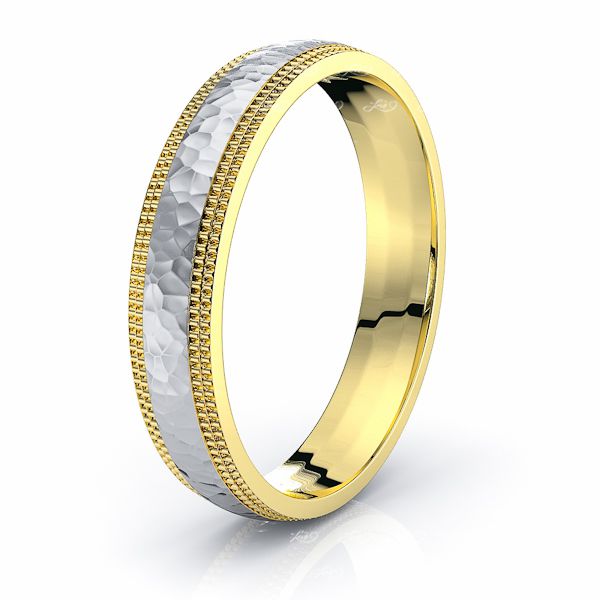
Classic Comfort-Fit Wedding Bands
Rounded interior, easy everyday wear.
Shop Comfort-Fit
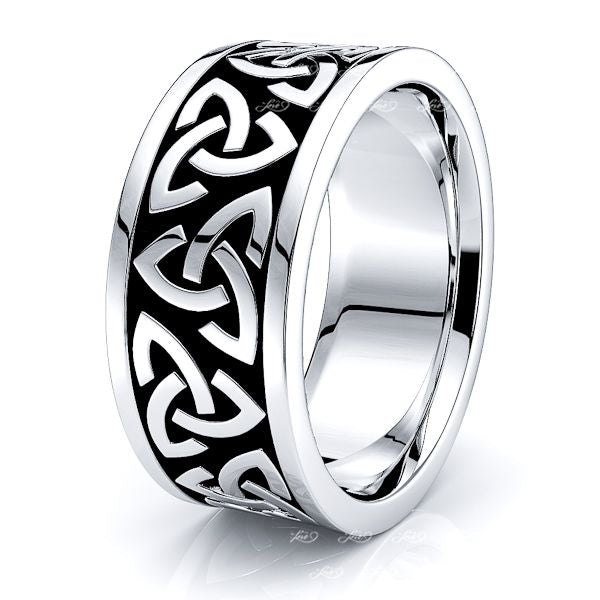
All Wedding Bands
Every fit, metal, and width in one place.
Shop All Styles
Men's Wedding Bands
Comfort-fit and standard-fit styles for men.
Shop Men's
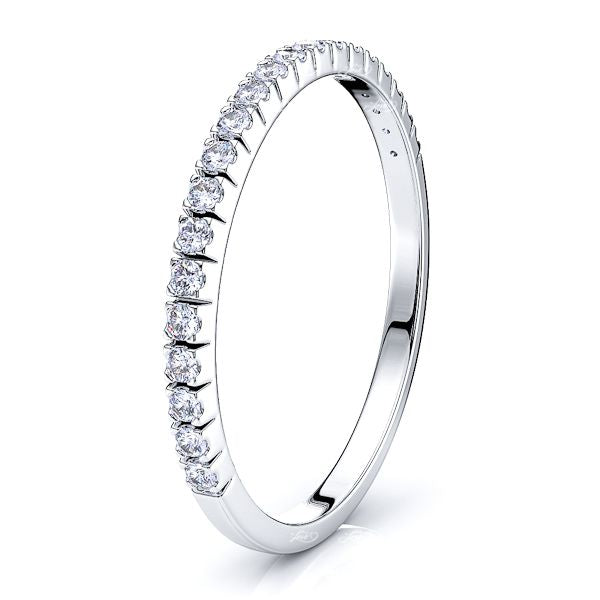
Women's Wedding Bands
Comfort-fit and standard-fit styles for women.
Shop Women's
Bestselling His & Hers Sets
View all-
Solid Double Milgrain Comfort Fit Mens Wedding Ring - Two-Tone Gold (White-Yellow)
Regular price $727Regular priceUnit price per$969Sale price $727Sale -
Solid Double Milgrain Comfort Fit Mens Wedding Ring - Yellow Gold
Regular price $727Regular priceUnit price per$969Sale price $727Sale -
Solid Double Milgrain Comfort Fit Mens Wedding Ring - Rose Gold
Regular price $727Regular priceUnit price per$969Sale price $727Sale -
Solid Double Milgrain Comfort Fit Mens Wedding Ring - White Gold
Regular price $727Regular priceUnit price per$969Sale price $727Sale

Talk to a Wedding Band Expert
Talk to a Wedding Band Expert
Have a question about sizing, metals, or engraving? Our specialists are happy to help — no pressure, just honest advice.
Send Us a Quick Question
Fill out the form below and one of our wedding band experts will get back to you within one business day.
Frequently Asked Questions
What's the difference between comfort fit and standard fit?
Do comfort fit rings run smaller?
Is comfort fit or standard fit better for wide wedding bands?
Does comfort fit cost more than standard fit?
Can comfort-fit rings be resized?
Who should choose a comfort-fit wedding band?
Is standard fit better for engraved wedding bands?
Do comfort-fit and standard-fit rings weigh differently in the same metal?
Explore by Topic
Browse related guides, collections, and buying tips — organized to help you find exactly what you need next.