
How to Choose the Perfect Men's Wedding Band (2026 Guide)
Shopping, not reading?
Skip ahead and browse the full wedding band collection.
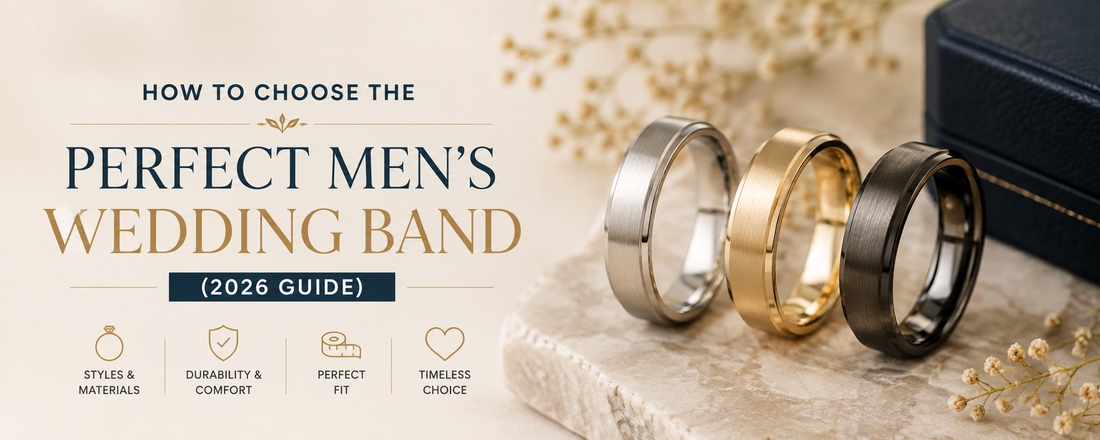
Choosing a men's wedding band is the one piece of jewelry most men will wear every single day for the rest of their lives, so it's worth getting right. The good news: it comes down to six clear decisions — metal, width, fit, finish, style, and budget — and once you understand each, the perfect ring almost chooses itself. This guide walks you through every one from a jeweler's bench, with real trade-offs, comparison tables, and honest advice, so you can buy with total confidence. When you're ready to see styles, you can shop our full Men's Wedding Bands collection at any point.
Unlike an engagement ring, a men's wedding band is chosen for the long haul rather than the sparkle — it should feel comfortable enough to forget you're wearing it, and tough enough to survive everything your hands do. Keep that lens in mind as you read, and every decision below becomes easier. We've helped thousands of couples make exactly this choice, and the same handful of questions come up every time; this guide answers them in the order they actually matter.
The short answer: how to choose a men's wedding band
To choose a men's wedding band, pick a metal that suits your lifestyle and skin (14K gold and platinum are the most popular for daily wear), a width that balances your hand (typically 6mm–8mm for men), a comfort-fit interior for all-day wear, and a finish and style that reflect your taste. Then confirm your ring size and set a budget. Order 8–12 weeks before the wedding to allow for sizing and any engraving.
That's the decision in a nutshell. The rest of this guide explains each factor in depth — because the difference between a ring you tolerate and a ring you love is in the details.
Start with your lifestyle
Before metal or style, start with how you actually live, because your daily life should drive the decision more than fashion. A wedding band is worn through work, exercise, travel, and decades of ordinary days, so the ring that's right for a surgeon or a software engineer is not the same ring that's right for an electrician, a chef, or a rock climber.
If you work with your hands
If you work in a trade, lift weights, or are simply hard on your hands, prioritize durability and a lower-maintenance metal. A 14K or 10K gold band resists scratching better than softer 18K, and a slightly narrower, lower-profile ring catches less on tools and gloves. Many active men keep a simple, tough band for work and a nicer one for occasions.
If you have sensitive skin
If you've ever reacted to a watch or a cheap ring, the culprit is usually nickel. Platinum is naturally hypoallergenic and the safest choice, while higher-karat gold (18K) contains less alloy than 10K and is gentler on skin. We cover this in depth in our wedding band metals guide.
If you rarely take it off
If you know you'll never remove your ring, comfort fit and a metal that ages gracefully matter most. Platinum develops a soft patina rather than wearing away, and gold can be re-polished indefinitely — both reward a lifetime of continuous wear.
Choosing the metal
Metal is the single biggest decision you'll make, because it drives price, durability, color, weight, and how much upkeep your band needs over a lifetime. Here's how the main options compare for a men's band.
| Metal | Durability | Best for | Relative price |
|---|---|---|---|
| 10K gold | Hardest gold — most scratch-resistant | Active hands, budget-conscious | $ |
| 14K gold | Excellent everyday balance | Most men — the all-rounder | $$ |
| 18K gold | Softer, richest color | Luxury look, gentler wear | $$$ |
| Platinum (950) | Very durable, develops a patina | Heirloom quality, sensitive skin | $$$$ |
Gold: yellow, white, and rose
Gold is the classic choice and comes in three colors from the same karat. Yellow gold is the traditional, warm option that never needs re-plating. White gold delivers a bright, contemporary silver tone at a gold price, though its rhodium plating benefits from a refresh every few years — compare it against platinum in our gold vs platinum guide. Rose gold, colored by copper, is a distinctive, slightly harder-wearing choice that's increasingly popular for men. The karat number — 10K, 14K, or 18K — tells you how much pure gold the alloy contains; 14K is the everyday sweet spot for most men. Explore the range in our gold wedding bands collection.
Platinum: the heirloom metal
Platinum is denser, naturally white, and hypoallergenic, giving a men's band a substantial, quality weight that many men love. It doesn't wear away so much as develop a gentle patina over time, and it holds diamonds securely, making it a favorite for diamond-set men's bands. It costs more than gold, but it's a true lifetime, heirloom metal. See the selection in our platinum wedding bands collection.
A note on tungsten and titanium
You'll see tungsten and titanium marketed as tough, affordable men's metals, and they are hard and light. But both share one serious drawback: they cannot be resized, and they're difficult to remove in an emergency. For a ring meant to last and adapt over a lifetime, we recommend and craft in gold and platinum, which can be resized, repaired, and passed down. If you're weighing these contemporary metals, our tungsten vs titanium guide lays out the honest trade-offs.
Width: finding the right proportion
Width is measured in millimeters and changes the entire character of a band. For men, widths commonly run from 5mm to 8mm, though the right number is about proportion to your hand, not a rule. The principle: broader hands and longer fingers carry a wider band beautifully, while slimmer hands are flattered by a more moderate width.
| Width | Look & feel | Best suited to |
|---|---|---|
| 4mm–5mm | Slim, understated, lightweight | Slimmer hands, low-profile preference |
| 6mm | The classic men's width — balanced | Most men (the safe, timeless choice) |
| 7mm | Bold and substantial | Broader hands, a stronger statement |
| 8mm+ | Maximum presence, showcases detail | Large hands, dramatic designs |
A practical tip: try widths on before committing, because a 6mm and an 8mm feel very different on the finger even though the numbers look close. Remember too that a wider band feels more snug at the same nominal size, so wider rings are often sized up slightly. If you'd like to see how width interacts with fit and comfort, our complete wedding ring buying guide covers it alongside every other basic.
Profile and fit: comfort fit vs standard fit
Two men who buy the "same" 6mm ring can have completely different experiences depending on the profile and interior fit. This is one of the most overlooked decisions, and it matters more for men because men's bands are wider and heavier.
Comfort fit vs standard fit
Comfort fit means the inside of the band is slightly domed, so only the center touches your finger. The ring slides on easily over the knuckle and feels smoother through a full day — a genuine difference on wider men's bands and for anyone who has never worn a ring. Standard (flat) fit uses more metal against the skin and can feel more secure to some wearers. Neither is better; it's personal preference. One practical note: comfort-fit bands often measure about half a size smaller than standard fit, so always confirm your size against the exact style.
Profile: the outer shape
The profile is the ring's cross-section. A domed (court) profile is the traditional, softly rounded shape most people picture — comfortable and timeless. A flat profile reads modern and architectural. A beveled edge adds crisp angled edges for a contemporary, structured look, as seen on our beveled woven styles below. Profile is pure aesthetics, so choose the silhouette you're drawn to.
Finish: polished, matte, brushed, and more
Finish is the surface texture, and it dramatically changes a ring's personality without changing its shape or metal. It's also practical: textured finishes hide the fine everyday scratches that show more on a bright polish, so they keep looking intentional for longer.
- Polished — a bright, mirror-like shine. Classic and dressy, but shows fine scratches over time.
- Matte — a soft, low-sheen surface. Understated and modern; disguises wear well.
- Brushed (satin) — fine parallel lines for a subtle textured sheen. A popular, versatile men's choice.
- Hammered — a dimpled, handcrafted surface that catches light in facets. Rugged and distinctive.
- Sandblasted — a fine, sandy matte texture; contemporary and low-maintenance.
Many of the best men's bands combine finishes — a brushed center with polished beveled edges, for instance — for contrast and depth. If low maintenance is a priority, lean toward matte, brushed, or hammered over high polish.
Plain vs diamond men's bands
Not long ago, diamonds on a man's ring were rare; today they're a mainstream choice, and how the stones are set makes all the difference for a masculine look.
Plain bands
A plain band puts all the emphasis on metal, profile, and finish. It's timeless, lower-maintenance, and typically more affordable — the classic choice, and never wrong. Explore clean designs in our men's plain wedding bands.
Diamond bands
For subtle sparkle, men's diamond bands usually use secure, low-profile settings: channel-set diamonds sit protected within the band's walls; flush (gypsy) set stones are embedded level with the surface for a rugged, snag-free look; and pavé adds fine accent stones for more shine. Because the setting security matters, this is where platinum's strength shines. Browse our men's diamond wedding bands to compare settings.
Style: classic, braided, Celtic, and two-tone
With the technical decisions made, style is where your ring becomes personal. Men's bands span a wide range of looks, and choosing a style you genuinely love matters more than any trend.
Classic and modern
A simple domed or flat band in your chosen metal and finish is the enduring default — understated, versatile, and always in style.
Hand-braided and woven
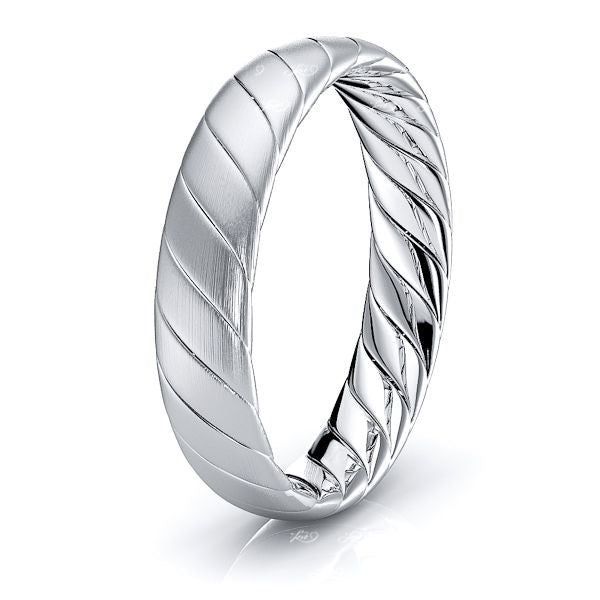
Handcrafted braided and woven bands add texture, craftsmanship, and a distinctive story to a men's ring. They range from subtle center braids to fully woven designs. Here are a few of our handmade men's styles across metals and budgets:
 Featured pickNoah Hand Woven Mens Wedding Ring
From $657.00
Featured pickNoah Hand Woven Mens Wedding Ring
From $657.00
 Featured pickLucas Hand Woven Mens Wedding Band
From $801.00
Featured pickLucas Hand Woven Mens Wedding Band
From $801.00
Explore the full range in our men's hand-braided wedding bands.
Celtic and carved
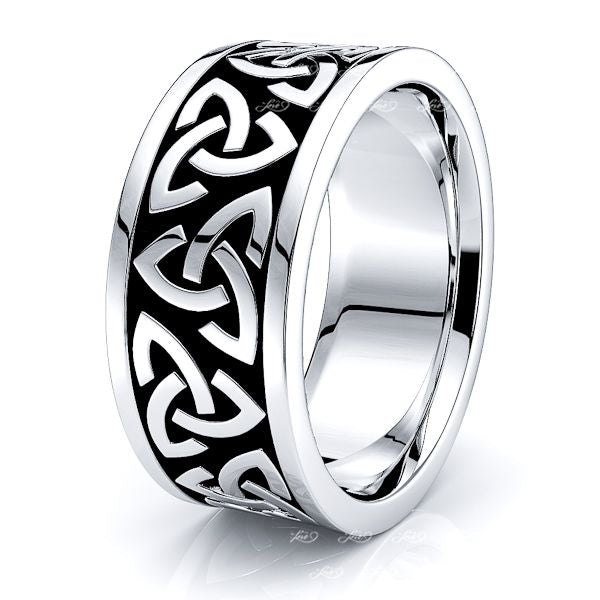
Celtic knotwork carries symbolism of eternity and connection, while carved designs — Greek key, milgrain edges, or engraved patterns — add heritage and detail. See our men's Celtic wedding bands and carved styles.
Two-tone
Two-tone bands combine two colors of gold — or gold and platinum — in a single ring, adding depth and letting you enjoy more than one metal. A great option if you can't decide between white and yellow. Browse men's two-tone wedding bands.
Our picks: standout men's wedding bands
To make this concrete, here are a few of our best men's bands that show the range — from an accessible everyday woven band to a substantial platinum heirloom. Each is handcrafted in New York and made to order.
 Featured pickWilliam Hand Woven Mens Wedding Band
From $957.00
Featured pickWilliam Hand Woven Mens Wedding Band
From $957.00
 Featured pickJayce Mens Hand Braided Wedding Ring
From $1,103.00
Featured pickJayce Mens Hand Braided Wedding Ring
From $1,103.00
If keeping to a budget matters, our men's wedding bands under $1,000 collection has genuine solid-gold options, and our affordable wedding bands guide shows where to save without regret.
Matching your partner's ring
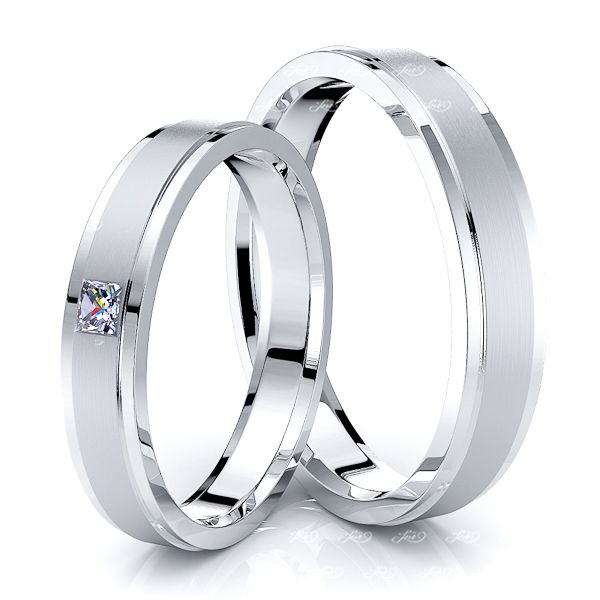
Many couples like their rings to coordinate, and a men's band doesn't have to match a partner's exactly to feel like a set. A shared metal, finish, or a small repeated detail ties two very different rings together beautifully — his wider and more textured, hers slimmer and finer. If a coordinated look appeals to you, start with our his and hers wedding bands designed as pairs, and read our guide to choosing matching wedding bands for how to coordinate without being identical.
Sizing a men's wedding band
A perfect ring is worth nothing if it doesn't fit, and men's fingers are especially variable. Fingers are smallest in the morning and in the cold and swell in heat or after salt and exercise, so measure at the end of a normal day at a normal temperature, and take the reading two or three times. Remember that wider men's bands (6mm+) fit more snugly, so consider sizing up slightly, and confirm your size against a comfort-fit style specifically if that's what you've chosen.
You can measure accurately at home — our step-by-step how to measure ring size at home guide walks through every method and includes a printable chart that converts between US, UK, and EU sizes. Order early — around 8 to 12 weeks before the wedding — so there's time to resize if the first fit isn't perfect.
Setting a budget
Men's wedding bands span a wide range, and a beautiful, durable band is achievable at almost any budget. The biggest levers are metal (10K and 14K cost less than 18K and platinum), width (a slimmer band uses less metal), and whether the band is plain or diamond-set. Spend where it counts and save where it doesn't: it's sensible to choose 14K over 18K or a slightly narrower band, but avoid cutting corners on the setting quality of a diamond band or on buying from a jeweler who stands behind the ring. For a full breakdown, see our affordable wedding bands for couples guide.
Engraving and personalization
An engraving turns a men's band into a keepsake, and it's one of the easiest ways to make an understated ring personal. Most bands are engraved on the inside, hidden against the skin, where a wedding date, initials, coordinates, or a short phrase becomes a private message only you and your partner know. The available character count depends on the band's width and font — a wider men's band naturally allows more text, and some can be engraved on the outside as well. Because engraving adds a few days to production, factor it into your timeline. If you're stuck for words, popular choices range from quotes and wedding dates to coordinates and initials, including phrases split across a couple's two rings so they only feel complete together.
Caring for your men's band
A men's wedding band takes more daily punishment than most jewelry, but keeping it looking its best is simple. For routine cleaning, soak the ring for fifteen to twenty minutes in warm water with a drop of mild dish soap, gently brush it with a soft toothbrush, rinse, and dry with a lint-free cloth. Avoid harsh chemicals like chlorine and bleach, and take the ring off for heavy lifting, gardening, or the gym to minimize knocks and scratches. Gold and platinum can both be professionally re-polished to remove accumulated marks and look new again, and white gold benefits from occasional rhodium re-plating to keep its bright finish. A quick professional check once a year — especially for diamond-set bands, to confirm the stones are secure — keeps your ring in heirloom condition for life. Our full wedding band care guide covers cleaning by metal in detail.
Mistakes to avoid
- Chasing width over proportion. An 8mm band looks bold in a photo but can overwhelm a slimmer hand. Match the width to your hand, not to a trend.
- Ignoring your lifestyle. A high-polish 18K band on hard-working hands will scratch quickly. Choose durability to match your days.
- Skipping comfort fit on a wide band. A wide standard-fit ring can feel like a bolt on your finger. Comfort fit is worth it above 6mm.
- Guessing your size. Measure properly, at the right time of day, against the exact style — resizing costs time you may not have before the wedding.
- Choosing a metal that can't be resized. Tungsten and titanium can't adapt as your finger changes over decades.
- Leaving it too late. Order 8–12 weeks out to allow for sizing and engraving.
Expert tip
If you're torn between two widths or finishes, choose the more understated option. A wedding band is worn every day for decades, and the ring that feels a touch bold at the counter can feel like too much after a few years. A 6mm brushed 14K band, comfort fit, flatters almost every hand and never dates — it's the choice we'd steer most men toward if they wanted one safe recommendation. You can always express personality through a subtle detail like a beveled edge, a hidden engraving, or a hint of two-tone.
Where to shop next
Now that you know how to choose, the best next step is to see the styles in your chosen metal and width. Start with our complete Men's Wedding Bands collection, or narrow by what matters most to you: gold wedding bands, platinum wedding bands, men's diamond bands, or hand-braided styles. Coordinating with your partner? Begin with our his and hers wedding bands. Every ring is handcrafted in New York with free engraving, a lifetime warranty, and 30-day returns — so choosing with confidence never means choosing without a safety net.
Shop Wedding Band Collections
Explore our most-loved styles, from classic comfort-fit bands to modern two-tone designs.
Mens Wedding Bands
Every men's style, metal, and width.
200+ Styles
Gold Wedding Bands
Warm 10K, 14K and 18K gold bands.
49 Styles
Platinum Wedding Bands
Naturally white, heirloom-grade platinum.
142 Styles

Men's Diamond Wedding Bands
Subtle, secure diamond settings for men.
146 Styles
Men's Hand Braided Wedding Bands
Handcrafted braided and woven designs.
129 Styles
His and Hers Wedding Bands
Coordinated matching sets for couples.
198 Styles
Bestselling His & Hers Sets
View all-
Ryan Trinity Knot Mens Celtic Wedding Band
$1,255.00From$941.25Sale -
Noah Hand Woven Mens Wedding Ring
$657.00From$492.75Sale -
Solid Double Milgrain Comfort Fit Mens Wedding Ring - Two-Tone Gold (White-Yellow)
Regular price $727Regular priceUnit price per$969Sale price $727Sale -
Solid Double Milgrain Comfort Fit Mens Wedding Ring - Yellow Gold
Regular price $727Regular priceUnit price per$969Sale price $727Sale


Talk to a Wedding Band Expert
Talk to a Wedding Band Expert
Have a question about sizing, metals, or engraving? Our specialists are happy to help — no pressure, just honest advice.
Send Us a Quick Question
Fill out the form below and one of our wedding band experts will get back to you within one business day.
Frequently Asked Questions
What is the best metal for a men's wedding band?
How wide should a men's wedding band be?
What is comfort fit and is it worth it?
Should a man's wedding band match his partner's?
Can a men's wedding band be resized?
How much should a men's wedding band cost?
Are diamond wedding bands a good choice for men?
Polished or matte finish for a men's band?
Explore by Topic
Browse related guides, collections, and buying tips — organized to help you find exactly what you need next.