
White Gold vs Platinum: Which Metal Is Right for Your Wedding Band?
Shopping, not reading?
Skip ahead and browse the full wedding band collection.
Standing at the jewelry counter, two rings can look almost identical — the same bright, silvery-white shine, the same cool weight in your palm — and yet cost thousands of dollars apart, age in completely different ways, and demand completely different levels of long-term care. That is the white gold versus platinum decision in a nutshell. Both metals photograph the same in an engagement ring or wedding band, and both are popular choices for brides and grooms who want a clean, modern, colorless look. But underneath the surface, white gold and platinum are chemically, structurally, and economically two very different metals, and the choice you make today will affect how your ring looks and feels for the next fifty years.
This guide breaks down exactly what each metal is made of, how they perform under decades of daily wear, what they actually cost and why, and which one makes more sense for your lifestyle, your budget, and your skin. We will also walk through the one practical detail that trips up more first-time buyers than any other: rhodium replating, and why one of these two metals needs it and the other never does.
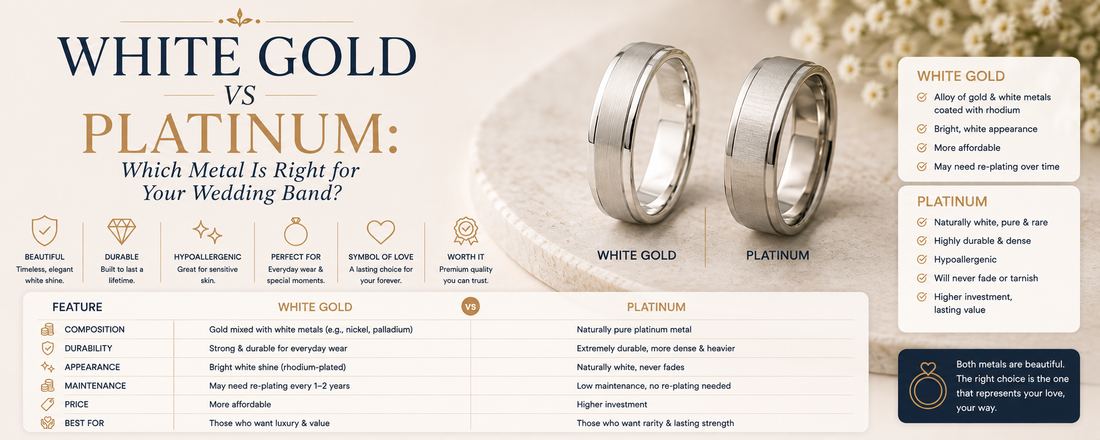
Quick Answer: White Gold vs Platinum
Platinum is a naturally white, 95% pure precious metal that never needs replating, develops a soft patina instead of losing metal, and costs significantly more due to its density and rarity. White gold is yellow gold alloyed with white metals and finished with a rhodium plating that gives it a bright white shine — a shine that fades and requires professional replating roughly every one to two years. Choose platinum for a lifetime, low-maintenance heirloom; choose white gold for a lower upfront price with periodic upkeep.
What Is White Gold, Really?
Pure gold is yellow, soft, and on its own far too malleable to hold up to daily wear as a ring. To make gold both harder and white in color, jewelers alloy it — melt it together — with white metals such as palladium, nickel, silver, or manganese. The result is white gold: a gold alloy that is typically sold in 14K (58.3% pure gold) or 18K (75% pure gold), with the remaining percentage made up of those white alloying metals.
Here is the part that surprises most first-time buyers: even after alloying, white gold is not truly white. It carries a faint, warm, yellowish-gray undertone, because gold's color is so dominant that alloying alone cannot fully neutralize it. To achieve the bright, icy-white look shoppers expect, jewelers apply a final microscopically thin layer of rhodium — a rare, extremely hard, brilliant-white metal from the platinum family — over the entire surface of the ring. That rhodium layer is what gives a brand-new white gold ring its dazzling, almost chrome-like shine.
Pieces like the
 Featured pickWilliam Hand Woven Mens Wedding Band
From $957.00
Featured pickWilliam Hand Woven Mens Wedding Band
From $957.00
$1,492.00
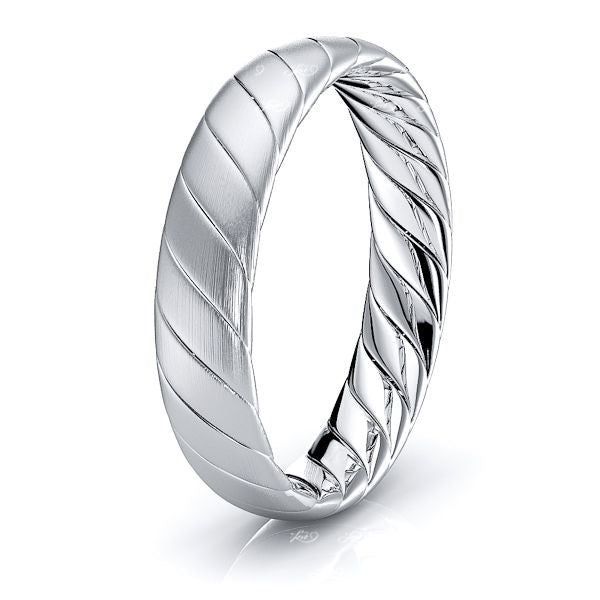
Shop now">William Hand Woven Mens Wedding Band, starting from $1,492 in white gold, and the
 Featured pickRohan Trinity Knot Mens Celtic Wedding Ring
From $1,255.00
Featured pickRohan Trinity Knot Mens Celtic Wedding Ring
From $1,255.00
$2,176.00
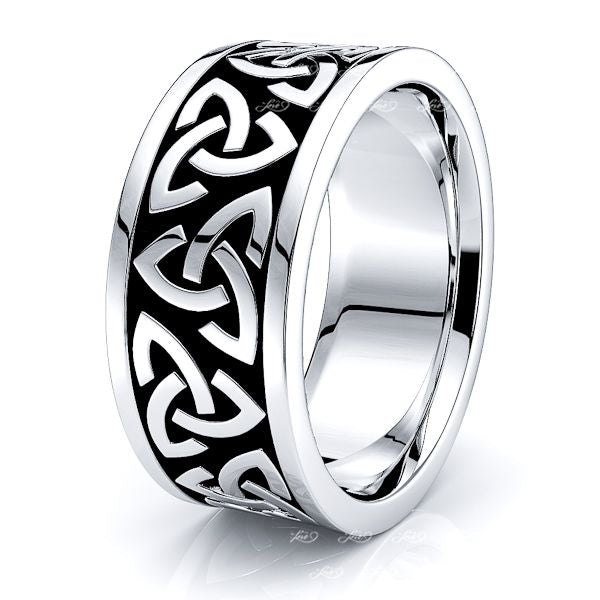
Shop now">Rohan Trinity Knot Mens Celtic Wedding Ring, from $2,176 in white gold, both rely on this gold-alloy-plus-rhodium formula to achieve their bright white finish. It is an excellent, time-tested approach — it just comes with one important maintenance detail we will cover in a moment.
What Is Platinum, Really?
Platinum could not be more different at the atomic level. It is not an alloyed white version of another metal — it is naturally white and naturally lustrous straight out of the ground. Fine jewelry platinum is almost always 95% pure (stamped 950Pt), alloyed with just 5% of another metal, usually ruthenium or iridium, purely to add workability. Compare that to 14K gold's 58.3% purity, and you can see why platinum is often described as the "purest" of the classic bridal metals.
Because platinum is white all the way through — not plated — there is no surface layer to wear away. Scratch it, polish it, wear it every day for thirty years, and it is still platinum from the surface to the core. This is the single biggest structural advantage platinum holds over white gold, and it is why jewelers have used it for the most important, once-in-a-lifetime pieces for well over a century.
Platinum is also denser and heavier than gold, which we will explore in the weight section below, and it is more resistant to everyday chemical exposure — chlorine, for instance, can damage and discolor gold alloys over time, while platinum shrugs it off. Some styles are offered in genuine platinum for exactly these reasons; the
 Featured pickJayce Mens Hand Braided Wedding Ring
From $1,103.00
Featured pickJayce Mens Hand Braided Wedding Ring
From $1,103.00
$1,816.00
Shop now">Jayce Hand Braided Wedding Ring, starting from $3,729, is a real example of a hand-finished platinum band built to be a true heirloom piece.
The Rhodium Replating Reality: What White Gold Owners Need to Know
This is the single most important practical difference between the two metals, and it is the one detail that most influences long-term satisfaction with a white gold ring. Rhodium plating, no matter how skillfully applied, is a thin surface layer — typically measured in microns. With daily wear, that layer gradually thins from friction against skin, fabric, dishes, gym equipment, and everyday life. As it wears down, the underlying gold alloy's natural warm, slightly yellow-gray tone starts to show through.
In practice, most white gold rings need to be professionally re-rhodium-plated roughly every one to two years to maintain that bright white factory finish, though people with more acidic skin chemistry, more physical jobs, or more frequent hand-washing routines may need it more often — sometimes annually or even more. The process itself is straightforward: a jeweler lightly polishes the ring, cleans it, and electroplates a fresh layer of rhodium, usually for a modest service fee. It is a normal, expected part of white gold ownership, not a defect — but it is a recurring cost and a recurring errand that platinum owners simply never have to think about.
Platinum needs no plating, ever, because there is no plating to wear off — the metal you buy is the metal you will still be wearing on your fiftieth anniversary. This single fact is often the deciding factor for buyers who want the classic white metal look with zero long-term maintenance. For a deeper walkthrough of cleaning schedules and at-home care for both metals, see our full care guide for wedding bands.
Durability and How Each Metal Wears Over the Decades
"Durability" means different things for these two metals, and understanding the difference will change how you think about long-term wear.
How Platinum Ages: Patina, Not Damage
Platinum is a dense, malleable metal. When it gets scratched or knocked, it does not chip away or lose material the way harder, more brittle metals can — it displaces. A microscopic amount of metal shifts to the side of the scratch rather than flaking off. Over years of wear, this creates a soft, satiny, matte surface texture called a patina. Many people — especially those who prefer a vintage, lived-in look — grow to love the platinum patina, and a jeweler can always polish it back to a high shine if you prefer the mirror finish. Crucially, because platinum does not lose meaningful metal volume during this process, it holds up exceptionally well over decades, and its density makes it the top choice for securing prong-set diamonds, since platinum prongs are less likely to wear thin or loosen over time.
How White Gold Ages: Scratching and Fading Rhodium
White gold, particularly at 14K, is a harder alloy than platinum, so it actually resists surface scratches slightly better in the very short term. But because that bright white finish depends on the rhodium topcoat, "wear" shows up differently: instead of a patina, you get a gradual yellowing or dulling as the rhodium thins, alongside normal scratching of the gold alloy underneath. For diamond-set pieces like the
 Featured pickIndira Diamond Women Eternity Ring
From $1,549.00
Featured pickIndira Diamond Women Eternity Ring
From $1,549.00
$2,386.00
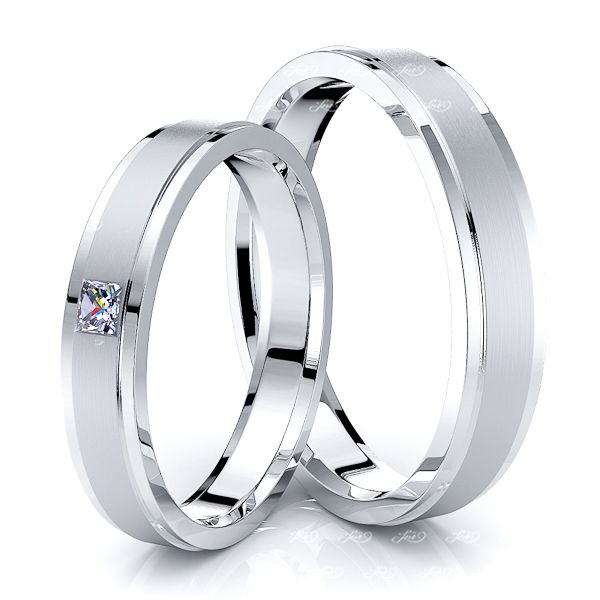
Shop now">Indira Diamond Women Eternity Ring, from $1,275 in white gold, this means the prongs holding the diamonds are strong and secure for daily wear, but the overall ring will need that periodic replating to keep its brightest finish, especially in high-set styles that see more contact.
Bottom line: platinum wins on long-term structural durability and prong security for precious stones; 14K white gold is reasonably scratch-resistant day to day but requires upkeep to preserve its color.
Does White Gold Turn Yellow Over Time?
Yes — and understanding why helps set the right expectations before you buy. White gold itself is not pure white; as we covered above, the gold alloy underneath the rhodium plating carries a warm, faintly yellow-gray cast. The bright white finish you see on a new ring comes entirely from that thin rhodium topcoat, not from the gold alloy itself. As the rhodium wears away through normal daily friction, the ring gradually reveals more and more of the alloy's natural warmer tone underneath, which many people describe as the ring "turning yellow" or "going dull."
This is not damage, discoloration, or a manufacturing flaw — it is simply the expected lifecycle of a plated finish, and it is completely reversible with a quick professional replating. The speed at which it happens varies quite a bit from person to person: someone who washes dishes frequently, works out daily, or has more acidic skin chemistry might notice fading within six to twelve months, while someone with lower daily wear might go two years or more between visits. Higher-karat white gold (18K) can actually show the underlying warmth slightly faster than 14K, because 18K contains more yellow gold and less of the hardening white alloy metals. Platinum, by contrast, never turns yellow, dulls in color, or reveals a "different metal" underneath, because the white color is the metal itself rather than a coating — one more reason it is often recommended for buyers who specifically dislike the idea of a ring changing color at all.
Weight and Feel on the Hand
Platinum is roughly 60% denser than 14K white gold. A platinum band and a white gold band of identical dimensions will not weigh the same — the platinum version will feel noticeably heavier and more substantial on the finger. Many wearers describe this as feeling more "solid" or "expensive," and for men's bands in particular, that heft is often a selling point. If you try on a wide platinum band and a same-width white gold band side by side, the weight difference is immediately obvious — sometimes as much as 40-70% heavier depending on the specific alloys and band width.
That said, weight is subjective. Some wearers, especially those who are not used to wearing jewelry, actually prefer the lighter, more discreet feel of white gold, particularly for wide statement bands or stacked eternity rings where cumulative weight matters. Neither answer is wrong — it comes down to personal preference for how a ring should feel throughout a full day of wear.
Price Comparison — and Why Platinum Costs So Much More
Platinum wedding bands typically cost significantly more than an equivalent white gold band, often 40-100% more depending on design and width, and there are three compounding reasons why.
- Density: Because platinum is denser than gold, a ring of the same size and shape requires more grams of metal to make. You are paying for more actual material, gram for gram, than you would for the same-looking gold ring.
- Rarity: Platinum is genuinely rarer than gold. Global platinum mining output is a small fraction of gold's, and the refining process is more complex, both of which push the raw material cost higher.
- Purity: At 95% pure, platinum jewelry contains far more precious metal by weight than 14K gold (58.3% pure) or even 18K gold (75% pure). You are simply buying more actual precious metal per ring.
White gold's lower price point makes it an accessible way to get the bright white bridal look without the platinum premium, which is part of why it remains one of the most popular metals for wedding bands overall. If your priority is stretching a budget across two rings, or adding a diamond upgrade, our guide to affordable his and hers wedding bands under $500 is a useful next read, and our broader gold vs platinum comparison covers how yellow gold stacks up on price as well.
Hypoallergenic Considerations
Both metals are considered good options for sensitive skin, but there are meaningful differences worth knowing. Platinum, at 95% purity with only a small amount of ruthenium or iridium alloyed in, is one of the most hypoallergenic metals available in fine jewelry — reactions to platinum are extremely rare. White gold is generally also well tolerated, especially when the alloy is nickel-free (a growing standard, and one worth confirming with your jeweler), since nickel is the most common trigger for metal allergies. However, because a white gold ring's surface is rhodium-plated, once that plating wears thin, the skin makes more direct contact with the underlying alloy, which can occasionally cause mild irritation in people with nickel sensitivity who were previously protected by the fresh rhodium layer. For anyone with a known metal allergy, platinum is the safer long-term bet, though a nickel-free white gold alloy kept freshly replated is a very reasonable and comfortable alternative for most people.
Active Lifestyle vs Low-Maintenance Preference: Which Should You Choose?
Think about how you actually live day to day, not just how the ring looks in the store.
Choose platinum if: you want a true "buy it once" ring with no recurring maintenance; you work with your hands, hit the gym often, or are simply someone who does not want to schedule replating appointments; you want maximum security for a large or heavily set diamond; you love the idea of a ring that ages into a soft, storied patina rather than needing to look factory-new forever; or this is an heirloom piece you want to pass down in its original material.
Choose white gold if: you want the same bright white bridal look for meaningfully less money upfront; you do not mind (or actually enjoy) an occasional trip to the jeweler for a fresh rhodium shine, which can also be a nice excuse for a professional cleaning and inspection; you are drawn to a specific design — like an intricate hand-braided or trinity knot pattern — that happens to be offered in white gold at a more accessible price point; or you want to allocate more of your budget toward a larger center stone or diamond accents rather than the band metal itself.
Both are excellent, legitimate choices worn by millions of happy couples. This is genuinely a maintenance-versus-cost tradeoff rather than a "better vs worse" decision, and either metal will serve you beautifully for a lifetime of wear when properly cared for.
Resale and Long-Term Value
Platinum generally holds its material value better over time because of its higher purity and the fact that there is no plating to discount for wear — a scrap or resale appraisal on platinum is assessing 95% pure metal throughout. White gold's resale value is based on its actual gold content (the karat weight), and appraisers typically do not add extra value for the rhodium plating, since that is a cosmetic, wearable layer rather than intrinsic precious metal. That said, wedding bands of any precious metal are rarely purchased with resale as the primary goal — sentimental and everyday-wear value tends to far outweigh investment considerations for most couples. If value retention is a meaningful factor in your decision, our dedicated guide on whether wedding bands hold their value goes deeper into how metal type, karat, and craftsmanship affect long-term worth.
White Gold vs Platinum: Side-by-Side Comparison
| Factor | White Gold | Platinum |
|---|---|---|
| Composition | Yellow gold alloyed with white metals, rhodium-plated | 95% pure platinum (950Pt), naturally white |
| Color source | Rhodium plating layer (wears over time) | Natural to the metal (permanent) |
| Maintenance | Replating needed roughly every 1-2 years | Never needs replating |
| How it wears | Rhodium thins, gold alloy underneath can scratch | Develops a soft patina; can be re-polished |
| Density / weight | Lighter | ~60% denser and noticeably heavier |
| Prong security for diamonds | Very good | Excellent — industry standard for fine stones |
| Typical price | Lower upfront cost | 40-100%+ more than equivalent white gold |
| Hypoallergenic rating | Good (best with nickel-free alloy) | Excellent — among the most hypoallergenic metals |
| Resale value basis | Gold content only (karat weight) | Full metal purity, no plating discount |
| Best for | Budget-conscious buyers who like a bright factory shine and don't mind upkeep | Buyers who want a lifetime, low-maintenance heirloom piece |
A Note on Resizing, Engraving, and Working With a Jeweler
One practical detail that often gets overlooked in the white gold versus platinum decision is how each metal behaves during resizing and engraving, both of which are common needs over the life of a ring. Platinum's density and malleability make it very forgiving to resize — a skilled jeweler can adjust it up or down without significantly weakening the band, and its higher melting point means it holds up well to the heat used in resizing and repair work. White gold resizes well too, though because it is a harder, more brittle alloy relative to platinum, more dramatic size changes can occasionally require more careful handling to avoid stress marks near the seam. Engraving is excellent on both metals: platinum's softness makes for exceptionally crisp, deep engraving that will last a lifetime without the plating concerns of white gold, while white gold takes a clean engrave as well, though very deep engraving on a thin band can, in rare cases, slightly affect how evenly rhodium plating adheres near the engraved area. Neither issue is a dealbreaker for either metal — it's simply worth mentioning to your jeweler if you know engraving or future resizing is part of the plan, so the band can be designed with enough material to accommodate it comfortably.
Expert Tip From Our Master Jewelers
If you love the bright white look of a freshly rhodium-plated ring but want to minimize how often you need to think about maintenance, ask your jeweler about a thicker-than-standard rhodium application at the time of purchase, and get in the habit of a quick professional inspection once a year — even if the shine still looks good. Catching a thinning rhodium layer early keeps replating simple and affordable, and the same visit is a good time to check that prongs are still snug, whichever metal you choose. And if you are torn between the two, try both on in person for a full day if your jeweler allows it: the weight difference between platinum and white gold is something photos and descriptions simply cannot convey, and it is often the deciding factor once people feel it on their own hand.
Explore White Gold and Platinum Wedding Bands
Ready to compare in person? Browse our full collection of White Gold Wedding Bands for the bright, budget-friendly bridal look, or explore our Platinum Wedding Bands for lifetime, low-maintenance pieces built to be heirlooms. Styles like the hand-braided
Featured pickJayce Mens Hand Braided Wedding Ring
From $1,103.00
$1,816.00
Shop now">Jayce Hand Braided Wedding Ring in genuine platinum, the woven
Featured pickWilliam Hand Woven Mens Wedding Band
From $957.00
$1,492.00
Shop now">William Hand Woven Mens Wedding Band in white gold, the
Featured pickRohan Trinity Knot Mens Celtic Wedding Ring
From $1,255.00
$2,176.00
Shop now">Rohan Trinity Knot Mens Celtic Wedding Ring, and the diamond-set
Featured pickIndira Diamond Women Eternity Ring
From $1,549.00
$2,386.00
Shop now">Indira Diamond Women Eternity Ring showcase how far each metal can go in a handcrafted design. You can also browse our full Wedding Bands collection or our Men's Diamond Wedding Bands for diamond-accented styles in both metals.
Still deciding? Our team of master jewelers is happy to walk you through both metals in person or over a video consultation, help you compare weight and finish side by side, and make sure whichever ring you choose fits your lifestyle, your budget, and your style for decades to come.
Shop Wedding Band Collections
Explore our most-loved styles, from classic comfort-fit bands to modern two-tone designs.
White Gold Wedding Bands
Bright, budget-friendly, and endlessly versatile.
Shop the Collection
Platinum Wedding Bands
Naturally white, hypoallergenic, and built to be a lifetime heirloom.
Shop the Collection
All Wedding Bands
Every metal, width, and style in one place.
200+ Styles

Men's Diamond Wedding Bands
Diamond-set bands crafted in white gold and platinum.
Shop the Collection
Bestselling His & Hers Sets
View all-
Noah Hand Woven Mens Wedding Ring
$657.00From$492.75Sale -
0.36 Carat V-Cut 6mm His and 5mm Hers Diamond Wedding Ring Set
$1,908.00From$1,431.00Sale


Talk to a Wedding Band Expert
Talk to a Wedding Band Expert
Have a question about sizing, metals, or engraving? Our specialists are happy to help — no pressure, just honest advice.
Send Us a Quick Question
Fill out the form below and one of our wedding band experts will get back to you within one business day.
Frequently Asked Questions
Does white gold turn yellow over time?
How often does white gold need to be replated?
Is platinum really worth the extra cost over white gold?
Which metal is more durable, white gold or platinum?
Is platinum or white gold better for sensitive skin?
Does platinum weigh more than white gold?
Do white gold and platinum wedding bands hold their value the same?
Can I get a diamond wedding band in either white gold or platinum?
Explore by Topic
Browse related guides, collections, and buying tips — organized to help you find exactly what you need next.